

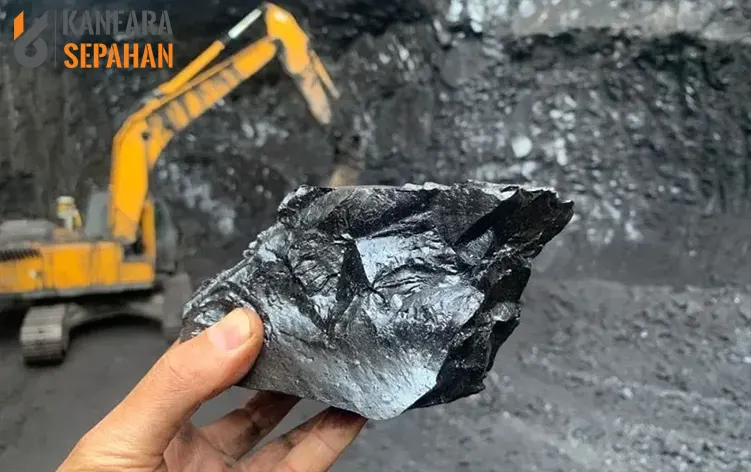
In its natural form, the material is usually shiny, black, brittle, and glass-like. Freshly broken pieces can have a distinctive lustrous appearance that makes them resemble coal or other dark carbon-rich materials.
After processing, its appearance changes according to particle size and preparation method:
Color alone should not be used to judge quality. Chemical composition, softening point, ash, moisture, particle size, and application-specific performance are more useful quality indicators.
The commercial value of this material comes from a combination of characteristics rather than one single property.
Many grades have a relatively high softening point, allowing them to remain solid at normal temperatures and soften when heated.
The exact value depends on the geological source and grade. Therefore, industrial buyers should always refer to the supplier’s current technical data sheet rather than assuming that every product has the same thermal characteristics.
This property is particularly useful in formulations where increased stiffness or thermal resistance is required.
The material is naturally hard and brittle at room temperature. This makes it relatively easy to crush and grind into controlled particle sizes.
Particle size can influence mixing, dispersion, dissolution, and processing efficiency, so mesh size should be selected according to the end use rather than simply choosing the finest available powder.
Because of its hydrocarbon nature, the material is compatible with a range of petroleum-based and organic formulations.
This characteristic helps explain its use as a modifying or binding component in asphalt, drilling fluids, coatings, inks, and other industrial products.
It can dissolve in selected organic solvents and compatible hydrocarbon-based systems, while it is generally insoluble in water.
Solubility can vary depending on grade, composition, solvent type, and temperature. For manufacturers, laboratory testing is therefore more reliable than assuming that every grade will behave identically.
Its resinous structure gives it useful binding and adhesion characteristics. Depending on the formulation, it can contribute to cohesion, film formation, viscosity control, and surface performance.
The material consists primarily of carbon and hydrogen, with smaller quantities of elements such as nitrogen, oxygen, and sulfur.
Its composition can vary according to geological source and processing. This variation is one reason why products from different deposits should not automatically be treated as interchangeable.
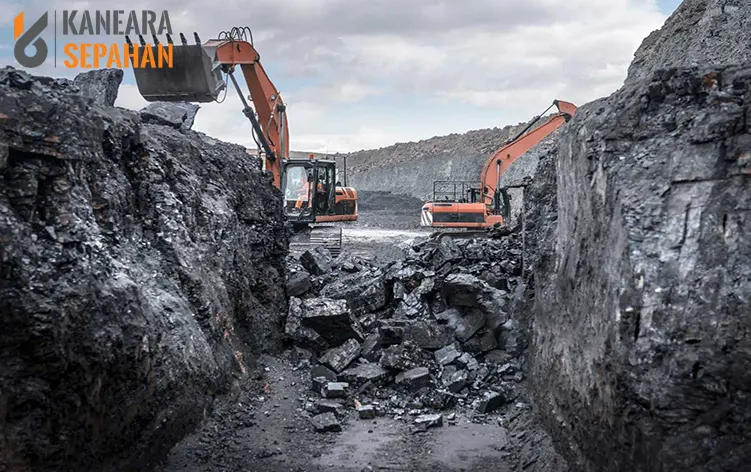
This natural hydrocarbon has applications in several industrial sectors. The most established uses include asphalt modification, oil and gas drilling fluids, printing inks, paints, coatings, and foundry materials.
Its performance depends on the grade and formulation, so the same material should not be expected to provide identical results in every application.
One of its important applications is in asphalt and road construction, where it is used as a natural asphalt modifier. In suitable asphalt formulations, it can increase binder stiffness and viscosity while improving resistance to permanent deformation at elevated temperatures.
These properties can be particularly useful for pavements exposed to heavy traffic and high temperatures. For a closer look at how this material affects asphalt performance, see our guide to gilsonite in asphalt.
The performance of the modifier is formulation-dependent. While increased stiffness can improve high-temperature performance, it does not necessarily provide the same advantages under low-temperature conditions. Therefore, the appropriate grade and dosage should be selected according to the asphalt binder, climate, traffic conditions, and required pavement performance.
Beyond road construction, the material is also used in selected asphalt-based coatings, sealants, and other construction formulations.
The material is also used as an additive in oil-well drilling fluids and certain cementing systems. Gilsonite in drilling fluid can contribute to wellbore stability and help reduce fluid invasion into certain formations due to its hydrocarbon compatibility and sealing characteristics.
It is particularly relevant to drilling systems where shale instability, lost circulation, or other formation-related wellbore problems need to be addressed.
Particle size is important in drilling applications because it affects how the additive interacts with fractures, pores, and the filter cake.
However, drilling performance depends on the entire mud system. Concentration, particle-size distribution, formation characteristics, temperature, and the other additives in the formulation all influence the final result.
Its natural resinous character and dark color make it useful in printing inks and related formulations.
Depending on the grade and formulation, it may contribute to:
It is particularly suitable for dark and black formulations where its natural color is advantageous.
In coatings, the material can function as a hydrocarbon resin or modifying additive.
It may be used in selected protective coatings, asphaltic coatings, industrial finishes, and other formulations where adhesion, water resistance, hardness, or hydrocarbon compatibility are important.
The appropriate grade depends on the resin system, solvent system, processing temperature, and performance requirements of the finished coating.
In foundry operations, the material can be incorporated into molding-sand systems.
Its carbon-rich composition can contribute to improved mold performance and surface quality under suitable casting conditions. It may help reduce certain surface-related casting defects and support the production of smoother castings.
Foundry formulations are highly application-specific, so the required grade and dosage should be established through testing rather than selected solely according to softening point.
The material can also be used in selected roofing and construction formulations.
Its hydrocarbon nature, water resistance, and binding properties make it useful in certain asphalt-based membranes, sealants, coatings, and related products.
Its function in these systems depends on the formulation. It should therefore be considered a functional additive rather than a universal replacement for conventional bitumen or polymer modifiers.
Some industrial formulations use this natural resin as a modifying or functional additive in polymers, rubber, and other hydrocarbon-compatible systems.
Its potential role depends on the polymer type, processing temperature, compatibility, particle size, and properties required from the finished product.
For this reason, application testing is particularly important when introducing the material into a formulation that has not previously used it.
Manufacturers choose this material for different reasons depending on the application. Common advantages include:
The benefit should always be evaluated against the requirements of the specific formulation. A grade that works well in asphalt may not be appropriate for drilling fluids, inks, or foundry systems.
Despite its useful properties, the material is not suitable for every formulation.