
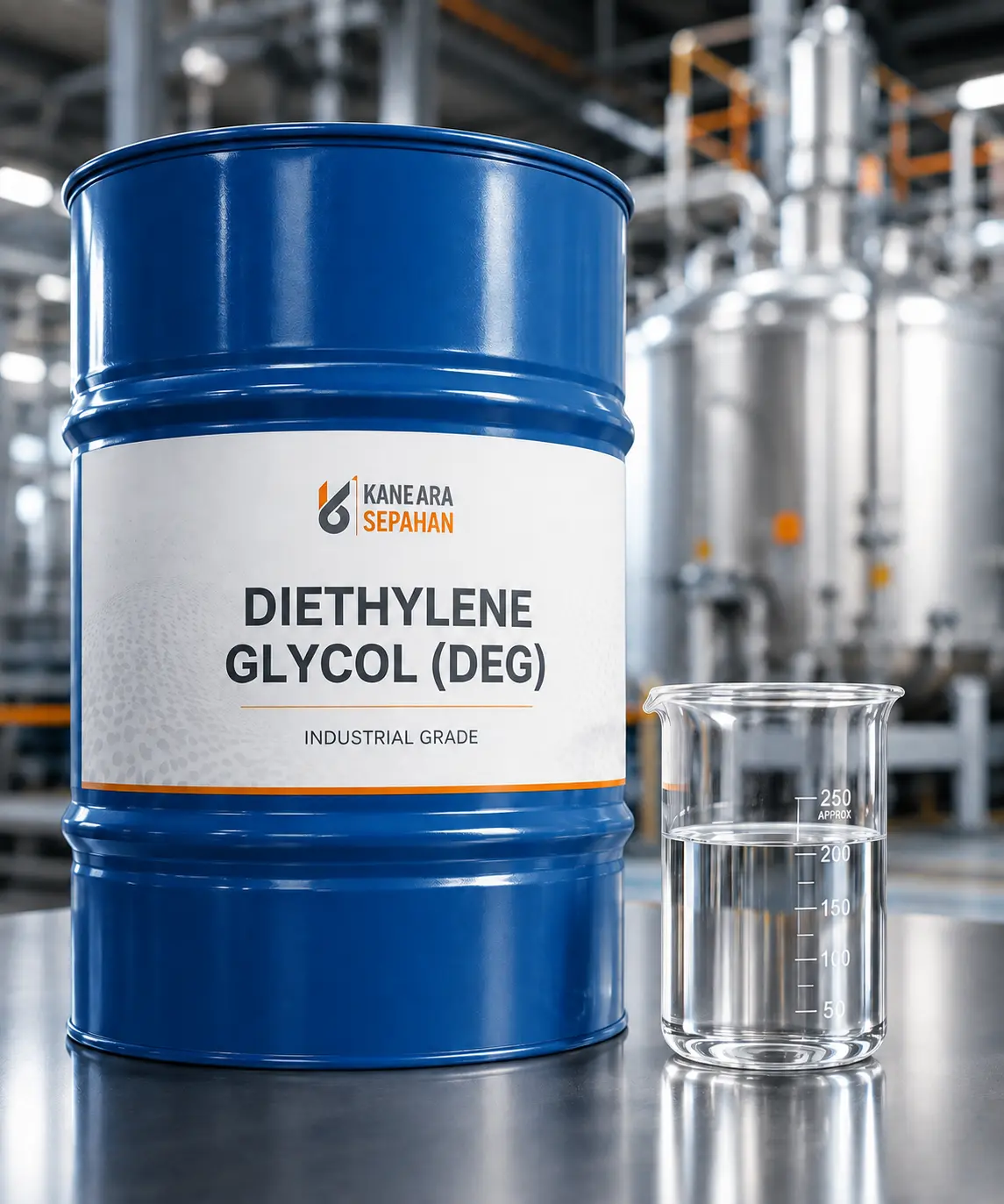
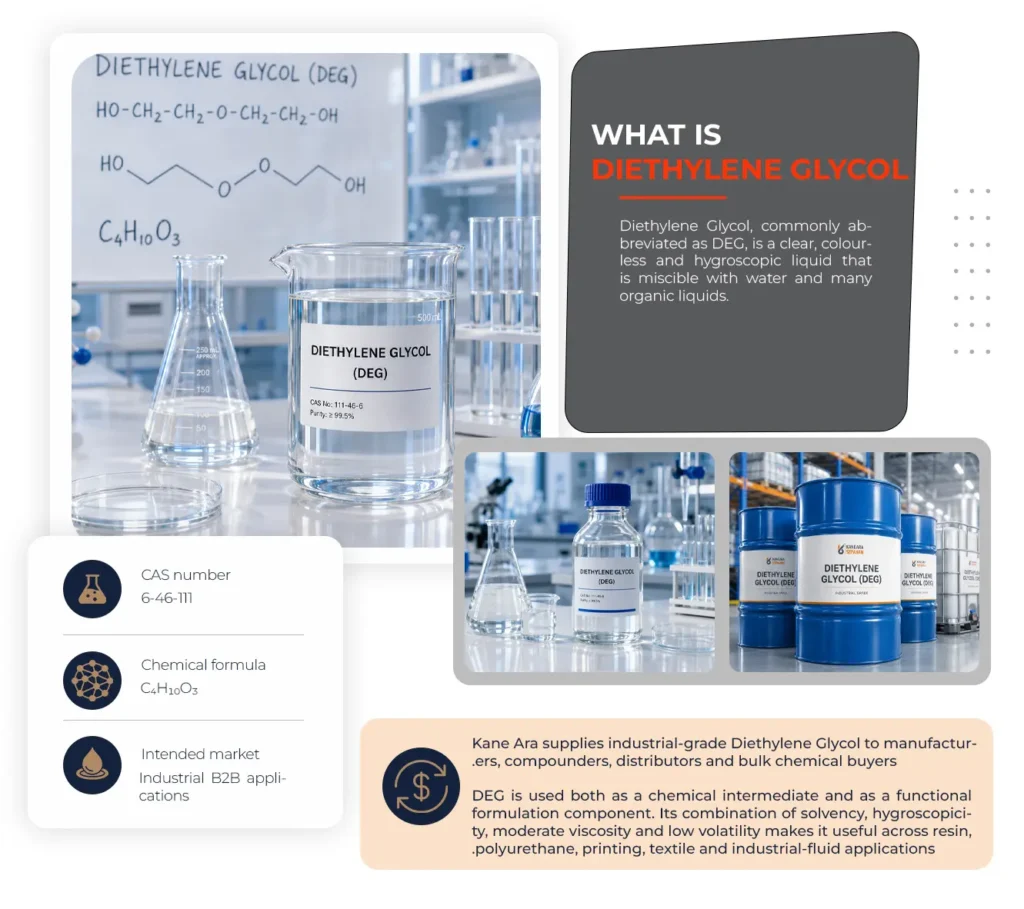
Kane Ara supplies industrial-grade Diethylene Glycol to manufacturers, compounders, distributors and bulk chemical buyers.
DEG is used both as a chemical intermediate and as a functional formulation component. Its combination of solvency, hygroscopicity, moderate viscosity and low volatility makes it useful across resin, polyurethane, printing, textile and industrial-fluid applications.
Available grades and exact technical parameters are confirmed through the applicable TDS and batch COA.
111-46-6
C₄H₁₀O₃
Industrial B2B applications
Liquid
Diethylene Glycol, commonly abbreviated as DEG, is a clear, colourless and hygroscopic liquid that is miscible with water and many organic liquids.
It is heavier and less volatile than Monoethylene Glycol and is frequently selected where a higher boiling solvent, intermediate or moisture-retaining component is required.
DEG should be purchased against an approved specification because purity, water, colour, acidity and trace impurities can affect processing and final-product quality.
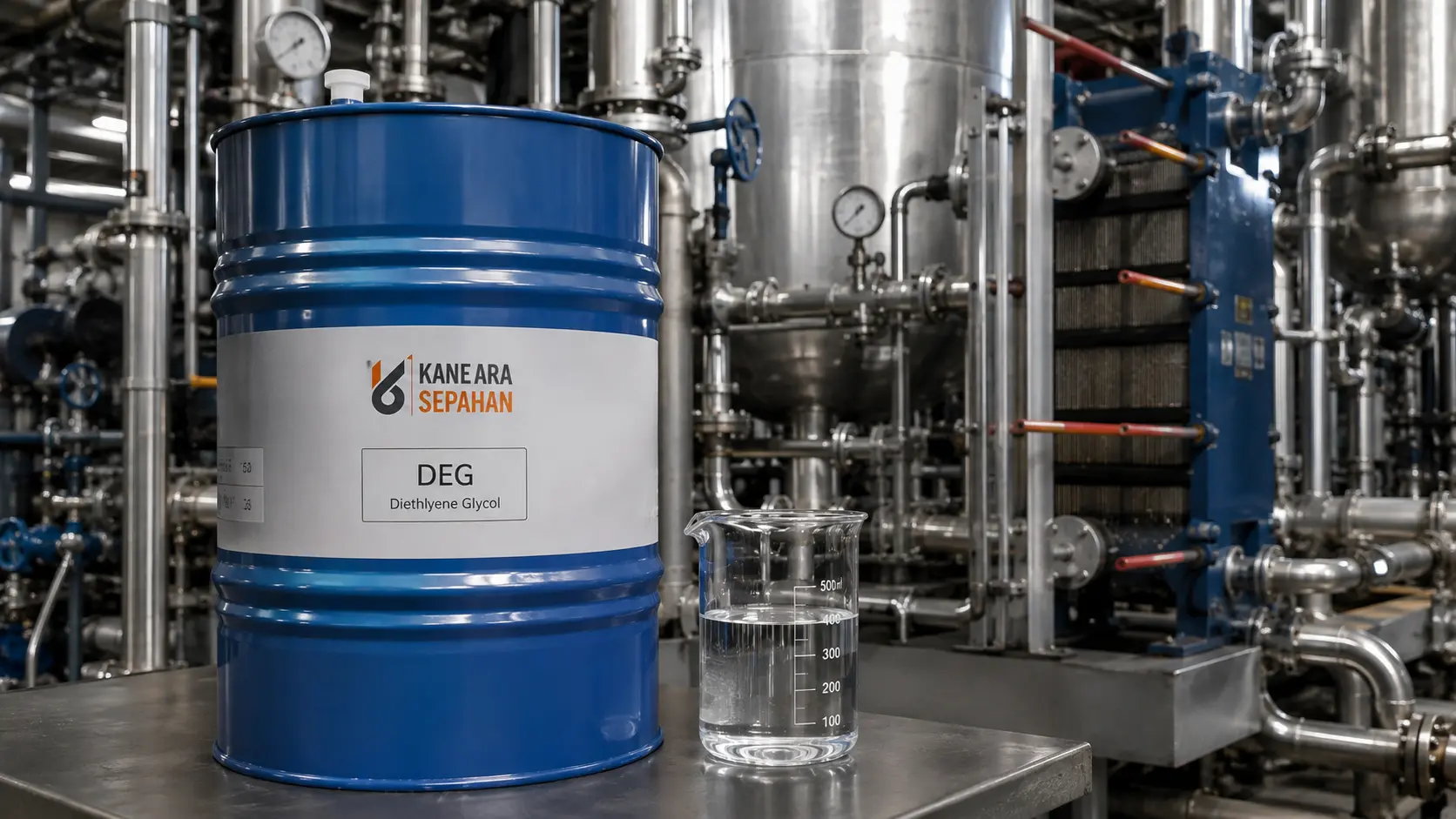
Kane Ara focuses on specification-based industrial sourcing. This helps buyers compare offers using technical parameters rather than price alone.
Our team supports international purchasing enquiries, document review, quotation preparation and shipment coordination for Russia, CIS markets and global destinations.
DEG pricing is not based on product name alone. The final cost depends on:
Buyers can request applicable technical and commercial documentation, including TDS, SDS/MSDS and available batch COA.
Producer, country of origin, packaging, labelling, shipment method and available Incoterms should be confirmed in the quotation.
Samples and third-party inspection can be discussed depending on order size, product availability and destination-country requirements.
DEG is an important raw material in the manufacture of unsaturated polyester resins used in composites, coatings, construction materials and other industrial products.
It is used in the production of polyester polyols and selected thermoplastic polyurethane systems. The required DEG specification should be evaluated based on the reaction process and final-polymer requirements.
DEG can function as a raw material or formulation component in selected plasticizer, adhesive and flexible-product applications.
Its low volatility and solvency make DEG useful in selected printing inks, pastes, pigments, dyes and coating formulations.
DEG may be used as a component or intermediate in selected brake-fluid, lubricant and technical-fluid formulations. It should not be treated as a ready-to-use finished fluid without proper formulation and qualification.
DEG is also used as a textile lubricant, moisture-retaining component, solvent and dehydrating agent in selected industrial processes.
Other applications include the production of emulsifiers, morpholine and additional organic derivatives.
Exact sales parameters may include DEG content, water, colour, acidity, aldehydes and other impurities. These must be confirmed in the contractual specification.
Item | Information |
Product name | Diethylene Glycol |
Abbreviation | DEG |
CAS number | 111-46-6 |
Chemical formula | C₄H₁₀O₃ |
Physical form | Liquid |
Typical appearance | Clear and colourless |
Available quality | Industrial and technical grades |
Purity | According to selected grade and batch COA |
Key characteristics | Hygroscopic, water-miscible, low volatility |
Intended market | Industrial B2B applications |
None of this is a claim we ask you to take on faith — every point below is something you can verify on your first order.
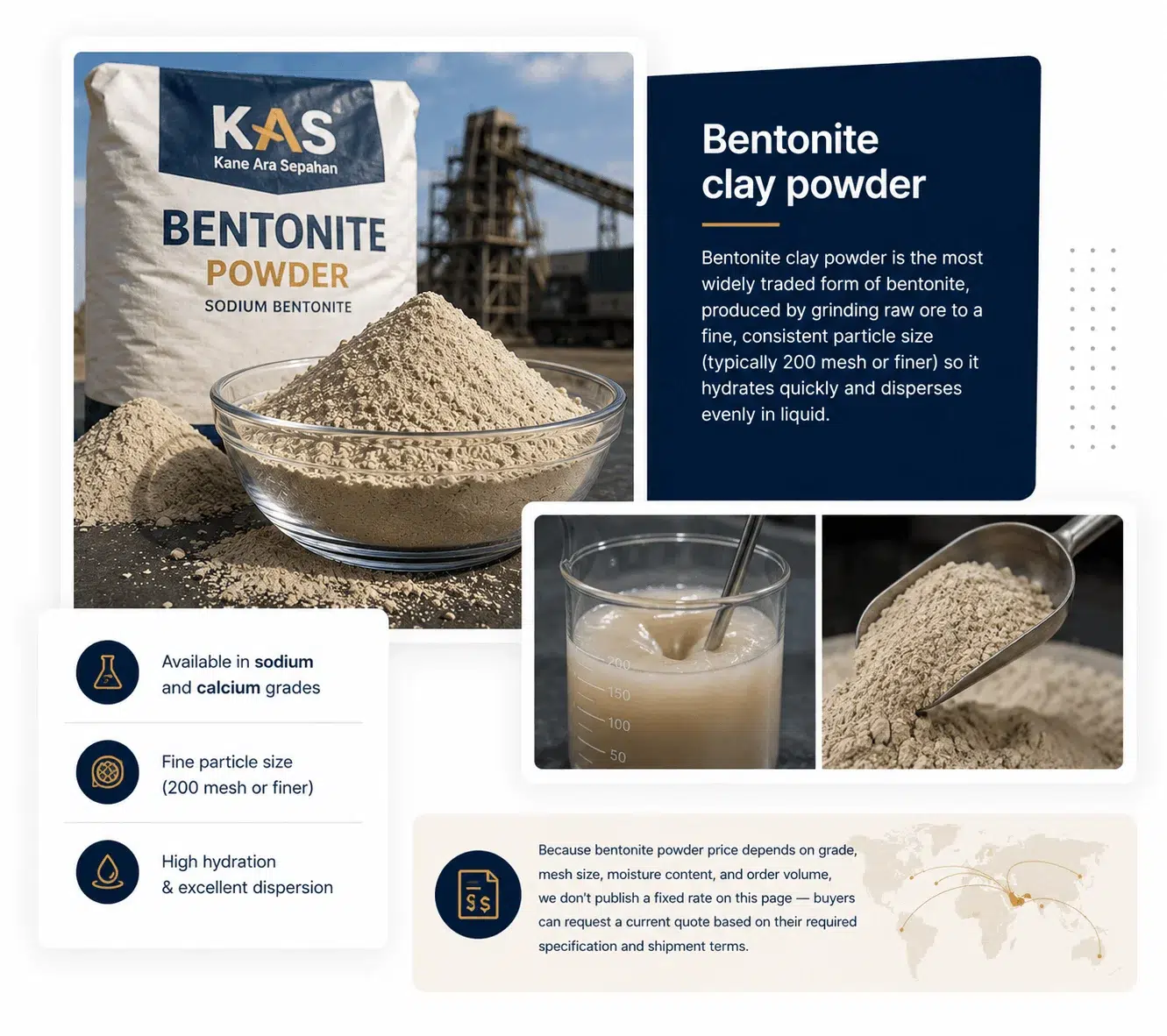
As a bentonite supplier with its own deposits and processing facility in Iran, Kane Ara Sepahan controls the full chain from mining to export — which is why buyers can source bulk bentonite clay with consistent grade across repeat shipments.
DEG price varies by grade, particle size, and order volume, so we work with each buyer directly to quote based on their exact specification, Incoterm, and destination port.
Response within 1 business day
Everything you need to know about sourcing DEG from Kane Ara Sepahan.
Not automatically. MEG, DEG and TEG differ in molecular weight, boiling point, viscosity, volatility and application performance. Any substitution should be approved by the buyer’s technical team.
No such suitability should be assumed. Unless explicitly approved and documented for a regulated application, the offered material must be treated as industrial grade only.
State the required DEG purity, water, colour, acidity, aldehydes or other controlled impurities, together with quantity, packaging and destination.