
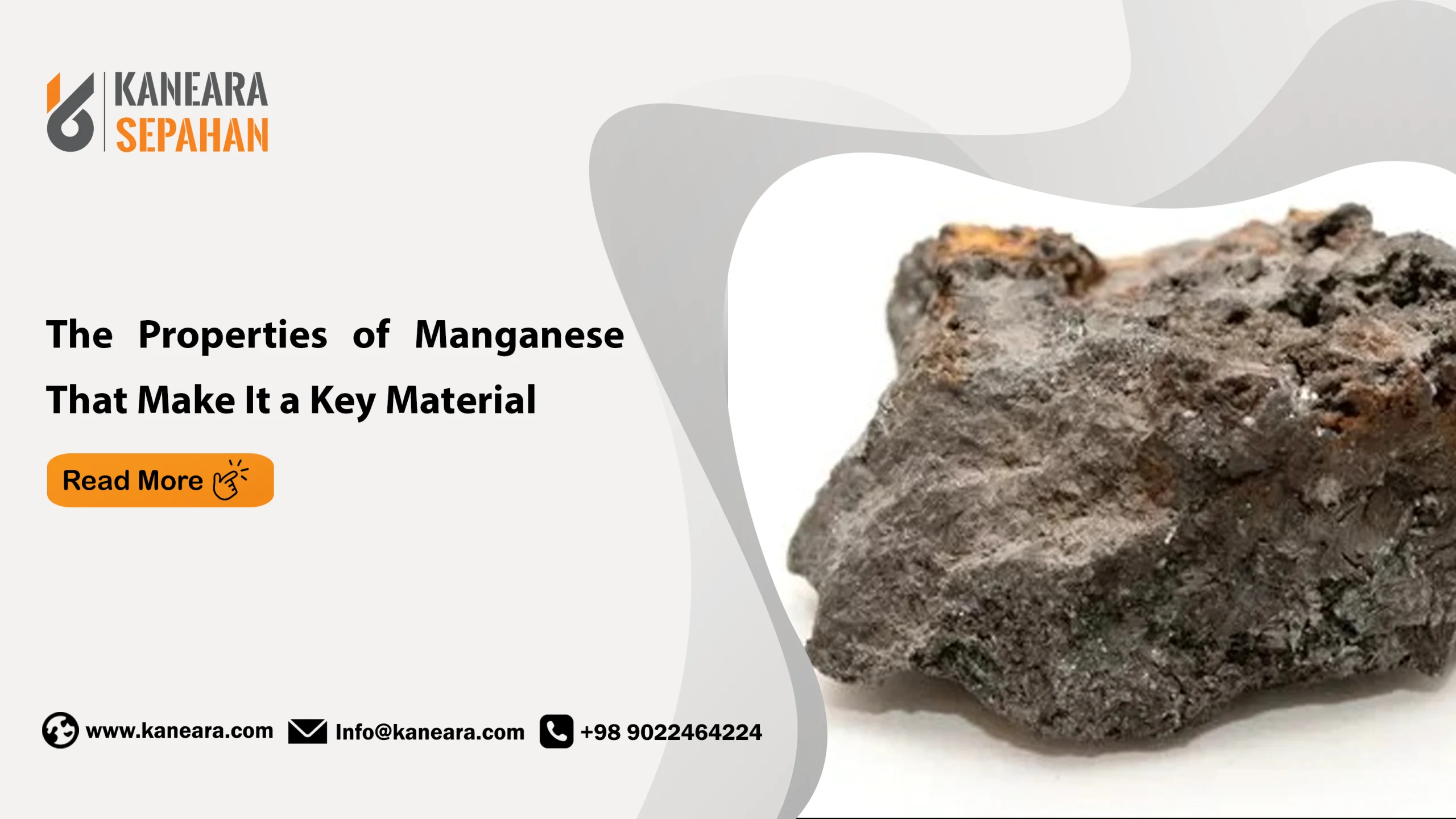
Manganese is a crucial element that, due to its unique properties, has wide applications in various industries such as steel manufacturing, batteries, chemicals, and energy. This metal plays a vital role in many industrial processes due to its ability to strengthen materials, resist corrosion, and improve conductivity. In this article, we will explore the properties of manganese that make it a key material in various industries.
Understanding the specific manganese properties helps engineers and procurement managers select the right alloys and compounds for their projects. Below are the standout characteristics of this metal:
High Tensile Strength and Durability
One of the most critical properties of manganese is its remarkable ability to increase the strength, toughness, and hardenability of materials. This makes it extremely valuable in the production of steel. For example, standard manganese steel (often containing 10%−15% manganese) exhibits exceptional tensile strength and becomes highly resistant to heavy wear and impact pressure.
Excellent Corrosion and Rust Resistance
Another vital property of manganese is its contribution to corrosion resistance. While pure manganese is reactive, when alloyed, it plays a key role in protecting metals. This property allows manganese-containing steel (like stainless steel) to withstand moisture, harsh acids, and other oxidative factors, ensuring a longer-lasting industrial lifespan.
Enhanced Electrical and Thermal Conductivity
While not as conductive as copper, specific manganese properties improve the overall electrochemical performance of materials. This is especially important in the production of cathode materials for batteries, making it essential in the energy and electronics industries.
Modification of Crystal Structures
Manganese heavily influences the crystal structure of metals and alloys during the cooling phase. Modifying the grain structure, it helps materials achieve superior mechanical stability. This feature is fundamental in the precision alloying and casting of metal parts.
Manganese is essential in steel production as an additive that improves the strength and performance of steel. Adding manganese to steel helps increase hardness and makes it more resistant to wear, making it ideal for use in industries such as automotive manufacturing and construction.
Manganese plays a crucial role in the production of lithium-ion batteries, which are used in electric vehicles, mobile devices, and renewable energy storage systems. Manganese enhances the battery life cycle and provides higher energy density, making it key for energy storage solutions.
In the chemical industry, manganese compounds are used in the production of dyes, chemicals, and as a catalyst in certain chemical reactions. Manganese also plays a role in manufacturing fertilizers and anti-corrosion products.
Manganese is used in producing various alloys, such as bronze and brass. It helps improve the mechanical properties and corrosion resistance of these alloys, making them ideal for use in casting and the production of metal parts.
The unique physical and chemical characteristics of this element directly translate into its widespread industrial uses:
Steel Manufacturing
Over 85% of global manganese demand comes from the steel industry. It acts as a deoxidizing and desulfurizing additive. The hardening property of manganese makes the resulting steel ideal for automotive manufacturing, construction infrastructure, and railway tracks.
Advanced Batteries and Energy Storage
Manganese plays a crucial role in the production of lithium-ion batteries (such as NMC – Nickel Manganese Cobalt batteries), which are the backbone of electric vehicles (EVs) and renewable energy storage systems. Its inclusion enhances the battery’s life cycle, improves thermal stability, and provides higher energy density.
Chemical Industry and Agriculture
In the chemical sector, manganese compounds (like Manganese Dioxide, MnO2) are used as catalysts in chemical reactions, colorants, and oxidizers. Additionally, manganese is an essential micronutrient, making its compounds a vital ingredient in agricultural fertilizers.
Foundry and Non-Ferrous Alloying
Beyond steel, manganese is used to produce various non-ferrous alloys, including specialized aluminum, bronze, and brass. It enhances the mechanical resilience and corrosion resistance of these alloys, making them perfect for marine hardware and aerospace casting.

Using manganese in materials increases their lifespan. In steel production and alloy manufacturing, manganese enhances resistance to wear, temperature, and pressure, which results in longer-lasting products.
Manganese can optimize industrial processes. For instance, in steel production, the use of manganese helps reduce energy consumption in smelting furnaces, making the process more energy-efficient.
Manganese enhances the efficiency and productivity of many systems. In the battery industry, for example, using manganese increases energy storage capacity and reduces production costs.
While manganese is an essential material, the process of extracting it can be environmentally damaging and costly. Therefore, there is a growing need for more sustainable sources and improvements in manganese recycling processes.
With the growing demand for electric vehicles and renewable energy storage, the future of manganese in advanced industries is promising. It is expected that the use of manganese will increase in electric vehicles and energy systems, leading to advancements in recycling and more efficient mining processes.
Conclusion
Manganese, with its unique properties, is a key material in various industries. From steel manufacturing to battery production and renewable energy, manganese plays an important role in improving the performance of systems and industrial processes. As technological advancements continue, the future of manganese in modern industries is very promising.