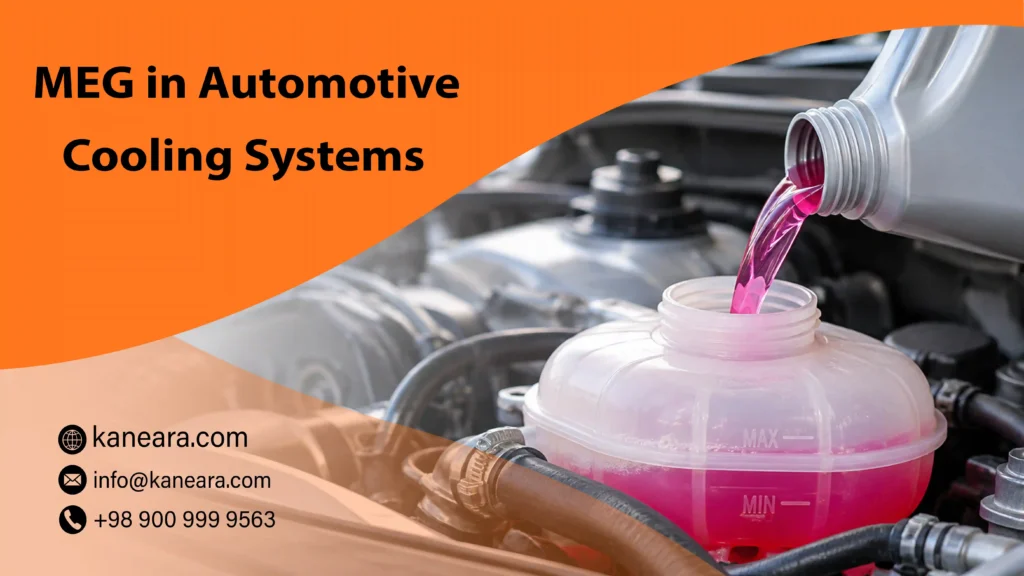
Monoethylene Glycol (MEG), also known as ethylene glycol (EG), is a key raw material used in automotive antifreeze and engine coolant formulations. When mixed with water and specialized additives, MEG helps prevent freezing, raises the coolants’ boiling point, and protects engine cooling systems against corrosion.
Its thermal properties make it suitable for conventional vehicle cooling systems and certain electric vehicle (EV) thermal management applications.
Why Is MEG Used in Automotive Cooling Systems?
Automotive engines generate significant heat during operation. Without an effective cooling system, excessive temperatures can damage engine components, reduce performance, and shorten engine life.
MEG plays an important role in maintaining stable operating temperatures through three main functions:
- Freeze Protection: MEG lowers the freezing point of water, helping prevent coolant from freezing in cold weather and reducing the risk of damage to radiators, engine blocks, and cooling lines.
- Boiling Point Elevation: Adding Monoethylene Glycol to water raises the mixture’s boiling point, helping the coolant remain liquid under high-temperature operating conditions.
- Cooling System Protection: MEG-based coolant formulations contain corrosion inhibitors that help protect metals and other components from rust, corrosion, and deposits.
It is important to note that MEG itself is not a complete corrosion-protection solution. The inhibitor package plays a major role in protecting the cooling system.
How Does MEG Work in Engine Coolant?
MEG is highly miscible with water, allowing manufacturers to produce stable water-glycol coolant mixtures.
In a typical internal combustion engine, the water pump circulates coolant through passages in the engine block and cylinder head. The heated coolant then flows through the radiator, where heat is released into the surrounding air before the fluid returns to the engine.
The MEG-water mixture supports this process by providing both heat transfer and protection against temperature extremes.
A commonly used formulation is a 50:50 mixture of MEG-based coolant concentrate and water. According to Ford Motorcraft, this ratio provides freeze protection down to approximately -37°C (-34°F) and boiling protection up to 129°C (265°F) under its specified conditions.
However, the optimum concentration depends on the vehicle manufacturer’s requirements and the expected operating environment.
MEG Applications in Electric Vehicle Cooling Systems
MEG is also used in certain electric vehicle cooling formulations.
Unlike conventional vehicles, electric vehicles require thermal management for components such as batteries, electric motors, and power electronics.
Temperature control is essential because excessive heat can affect battery performance, efficiency, and service life.
Ethylene glycol-based coolants can be formulated for these applications, including specialized low-electrical-conductivity products designed for electric vehicle systems.
However, EV cooling fluids must meet specific electrical, thermal, material-compatibility, and corrosion-protection requirements. Conventional engine coolant should not automatically be considered suitable for every EV.
What Is the Ideal MEG Concentration in Automotive Coolant?
The MEG-to-water ratio directly affects freezing protection, boiling behavior, and heat transfer performance.
A 50:50 mixture is a common reference formulation for automotive coolants. ASTM D3306 covers glycol-based engine coolants for automobiles and light-duty vehicles, with concentrate mixtures generally used at 40% to 60% by volume in water.
Using excessive MEG does not necessarily improve cooling performance. Higher glycol concentrations can reduce heat transfer efficiency and may provide less effective freeze protection than an appropriately formulated mixture.
For this reason, coolant manufacturers should select the concentration based on the intended application, product specifications, and vehicle manufacturer recommendations.
What to Consider When Selecting MEG for Coolant Manufacturing
For manufacturers producing automotive antifreeze and engine coolants, the quality of MEG is an important factor in achieving consistent product performance.
Key considerations include:
- MEG Purity: High-purity MEG helps ensure consistent formulation and product quality.
- Water Content: Controlled moisture levels are important for accurate formulation.
- Chemical Quality: Impurities can affect the finished product and its long-term performance.
- Additive Compatibility: MEG must work effectively with corrosion inhibitors and other formulation components.
- Product Specifications: Quality parameters should be verified through technical documentation and appropriate laboratory testing.
Manufacturers should also consider relevant standards, including ASTM D3306, when developing glycol-based automotive coolants.
Conclusion
MEG is an essential raw material in many automotive antifreeze and engine coolant formulations. Its ability to lower the freezing point and raise the boiling point of water makes it valuable for maintaining stable cooling system performance.
From conventional engine cooling to selected electric vehicle thermal management applications, the quality of MEG, the correct mixing ratio, and the appropriate additive package all contribute to the performance and reliability of the final coolant product.
For coolant manufacturers, selecting high-quality MEG is an important starting point for producing reliable automotive cooling fluids.
Frequently Asked Questions
1- Is MEG the same as automotive antifreeze?
No. MEG is a base chemical used in many antifreeze formulations. Finished automotive antifreeze typically contains MEG, water, and corrosion inhibitors.
2- Can pure MEG be used directly in car cooling systems?
Pure MEG is generally not recommended as a ready-to-use engine coolant. It must be formulated at the appropriate concentration with water and suitable additives to achieve the required thermal and corrosion-protection properties.
3- Does a higher MEG concentration provide better cooling?
Not necessarily. Excessive MEG concentration can reduce heat transfer efficiency and may negatively affect freezing protection. The correct ratio depends on the coolant formulation and vehicle specifications.
4- Is MEG used in electric vehicle coolants?
Yes. Some electric vehicle cooling fluids use ethylene glycol as their base fluid. However, EV applications may require specialized low-conductivity formulations to meet electrical safety and material-compatibility requirements.