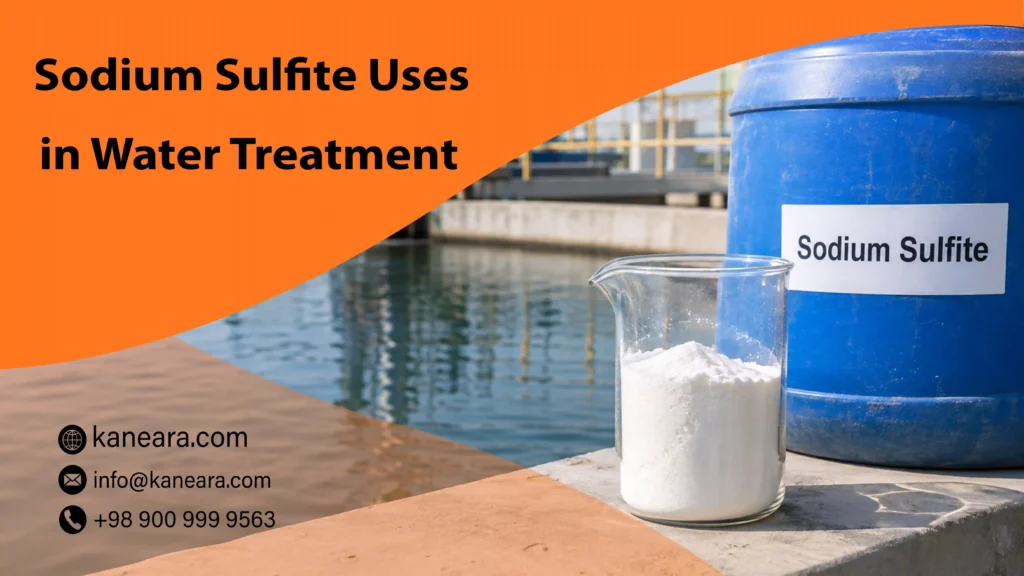
Sodium sulfite (Na₂SO₃) is a reducing agent widely used in industrial water treatment to remove dissolved oxygen and residual chlorine. Its two main applications are oxygen scavenging in boiler feedwater systems and dechlorination in industrial water and wastewater treatment.
By reacting with oxygen and chlorine, sodium sulfite helps protect equipment from corrosion, reduces the risk of oxidation damage, and supports reliable water treatment operations. However, its effectiveness depends on proper dosing, mixing, temperature, and system operating conditions.
What Is Sodium Sulfite Used for in Water Treatment?
The main applications of sodium sulfite in water treatment are:
| Typical Application | Main Function | Application |
|---|---|---|
| Boiler feedwater and closed hot water systems | Removes dissolved oxygen | Oxygen scavenging |
| Reverse osmosis pretreatment, ion exchange, and wastewater treatment | Neutralizes residual chlorine | Dechlorination |
The required dose depends on the amount of dissolved oxygen or chlorine in the water, chemical purity, and the operating conditions of the treatment system.
Sodium Sulfite as an Oxygen Scavenger in Boiler Water Treatment
Dissolved oxygen is one of the main causes of corrosion in boiler feedwater systems. When oxygen comes into contact with metal surfaces, it can cause localized pitting corrosion, particularly in feedwater piping, economizers, and boiler components.
Sodium sulfite is used as a chemical oxygen scavenger to reduce this risk. For consistent treatment performance, the purity of wholesale sodium sulfite is also an important factor, as it affects the amount of chemical required to achieve the desired oxygen removal.
How Does Sodium Sulfite Remove Dissolved Oxygen?
Sodium sulfite reacts with dissolved oxygen to form sodium sulfate, effectively consuming oxygen from the water. The chemical reaction is:
2Na₂SO₃ + O₂ → 2Na₂SO₄
This reaction converts sodium sulfite and oxygen into sodium sulfate, reducing the amount of dissolved oxygen available to cause corrosion.
Sodium Sulfite Dosage for Oxygen Removal
The theoretical dosage is approximately 7.88 mg of pure sodium sulfite per 1 mg of dissolved oxygen.
For example, removing 1 mg/L of dissolved oxygen from 1,000 liters of water theoretically requires 7.88 grams of pure sodium sulfite.
In actual boiler operations, the required amount may be higher because of chemical purity, handling losses, blowdown, and the need to maintain a controlled residual concentration. Industrial guidance commonly uses approximately 10 parts of sodium sulfite per part of oxygen as a practical starting estimate.
The final dosage should always be determined through feed water analysis and boiler water testing.
Why Is Sodium Sulfite Used in Boiler Systems?
Sodium sulfite offers several operational benefits:
- Reduced oxygen corrosion: Helps prevent pitting in boiler feedwater lines and equipment.
- Improved water chemistry control: Supports the management of residual dissolved oxygen.
- Cost-effective treatment: Provides an economical oxygen-scavenging option for suitable boiler systems.
- Compatibility with deaeration: Complements mechanical deaerators by removing remaining traces of oxygen.
Sodium sulfite can be used in catalyzed and non-catalyzed formulations. Catalyzed products react faster and may be more suitable when feedwater temperature is low, contact time is limited, or mechanical deaeration is insufficient.
Is Sodium Sulfite Suitable for All Boilers?
No. Boiler pressure and temperature are important factors when selecting an oxygen scavenger.
Sodium sulfite is commonly used in low- and medium-pressure boiler systems. However, at higher pressures and temperatures, it can decompose and produce sulfur dioxide (SO₂) and hydrogen sulfide (H₂S). These gases can contribute to corrosion in steam and condensate systems.
The U.S. Department of Defense’s industrial water treatment guidance advises against sulfite-based oxygen scavengers in boilers operating above 900 psig because of this decomposition risk.
Sodium sulfate, the reaction product, also increases dissolved solids and may contribute to deposition problems.
Therefore, the choice of an oxygen scavenger should be based on boiler pressure, operating temperature, feedwater quality, and the manufacturer’s treatment recommendations.
Read more: What Is Sodium Sulfite?
Sodium Sulfite for Dechlorination in Water Treatment
Another important application of sodium sulfite in water treatment is the removal of residual chlorine.
Chlorine is widely used as a disinfectant in water treatment. However, residual chlorine can damage chlorine-sensitive materials, including certain reverse osmosis membranes and ion exchange resins. It may also need to be removed before treated wastewater is discharged.
Sodium sulfite acts as a reducing agent by converting residual chlorine into chloride ions.
How Does Sodium Sulfite Remove Chlorine?
Sodium sulfite reacts with chlorine and water to produce sodium sulfate and hydrochloric acid:
Na₂SO₃ + Cl₂ + H₂O → Na₂SO₄ + 2HCl
During this reaction, chlorine is reduced to chloride, effectively removing its oxidizing effect.
The reaction is generally rapid when sufficient mixing is provided. However, proper dosing and residual chlorine monitoring are essential to achieve the required treatment efficiency.
Sodium Sulfite Dosage for Dechlorination
The theoretical amount required is approximately 1.78 mg of pure sodium sulfite for every 1 mg of residual chlorine, expressed as Cl₂.
For example, removing 1 mg/L of chlorine from 1,000 liters of water theoretically requires 1.78 grams of pure sodium sulfite.
Actual dosing may need adjustment based on chemical purity, water composition, chlorine concentration, and mixing conditions. An appropriate excess may be required to achieve complete dechlorination, but unnecessary overfeeding should be avoided.
Industrial Applications of Sodium Sulfite Dechlorination
Sodium sulfite is used in several industrial applications where residual chlorine must be controlled:
- Reverse osmosis pretreatment: Removes residual chlorine before water reaches chlorine-sensitive RO membranes.
- Ion exchange systems: Helps protect ion exchange resins from oxidative damage.
- Industrial wastewater treatment: Reduces residual chlorine before treated water is discharged.
- Process water treatment: Supports chlorine control in industrial processes that require low-oxidant water.
When chloramines are present, operators should also monitor total chlorine and confirm that the selected treatment conditions are effective for the specific chlorine compounds in the water.
Best Practices for Using Sodium Sulfite in Water Treatment
To achieve effective and reliable treatment, industrial operators should consider the following practices:
- Measure the initial oxygen or chlorine concentration: Calculate the theoretical chemical demand based on actual water analysis.
- Provide sufficient mixing: Ensure the chemical is distributed evenly throughout the water.
- Monitor chemical residuals: Test dissolved oxygen and sulfite residuals in boiler systems, or chlorine residuals after dechlorination.
- Control pH and operating conditions: Temperature, pH, and contact time can influence reaction performance.
- Avoid excessive dosing: Unnecessary chemical addition can increase dissolved solids and interfere with downstream water treatment.
- Follow safe handling procedures: Store sodium sulfite in suitable conditions, use appropriate protective equipment, and avoid contact with acids because sulfur dioxide gas can be released.
Conclusion
Sodium sulfite is an effective reducing agent for two important industrial water treatment applications: oxygen scavenging and dechlorination.
In boiler systems, it reacts with dissolved oxygen to form sodium sulfate, helping reduce the risk of oxygen-related corrosion. In industrial water treatment, it neutralizes residual chlorine and helps protect reverse osmosis membranes, ion exchange resins, and downstream equipment.
For reliable performance, sodium sulfite dosage must be based on water analysis, chemical purity, operating pressure, and treatment objectives. Proper monitoring and controlled chemical feeding are essential for maintaining water quality and protecting industrial equipment.
Frequently Asked Questions
1. What is the main purpose of sodium sulfite in water treatment?
Sodium sulfite is mainly used to remove dissolved oxygen from boiler feedwater and residual chlorine from industrial water and wastewater. It helps reduce oxygen-related corrosion and protects chlorine-sensitive equipment.
2. How much sodium sulfite is required to remove dissolved oxygen?
The theoretical requirement is approximately 7.88 mg of pure sodium sulfite per 1 mg of dissolved oxygen. Actual dosing depends on chemical purity, system losses, and the required residual concentration.
3. How much sodium sulfite is needed to remove chlorine?
Approximately 1.78 mg of pure sodium sulfite is theoretically required to neutralize 1 mg of residual chlorine expressed as Cl₂. Actual dosage should be adjusted based on water quality and residual chlorine measurements.
4. Can sodium sulfite be used in high-pressure boilers?
Sodium sulfite is generally used in low- and medium-pressure boilers. Its use in high-pressure systems is limited because thermal decomposition can produce corrosive sulfur-containing gases and increase dissolved solids.