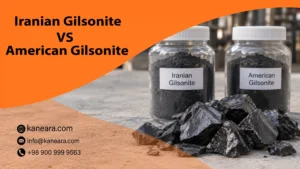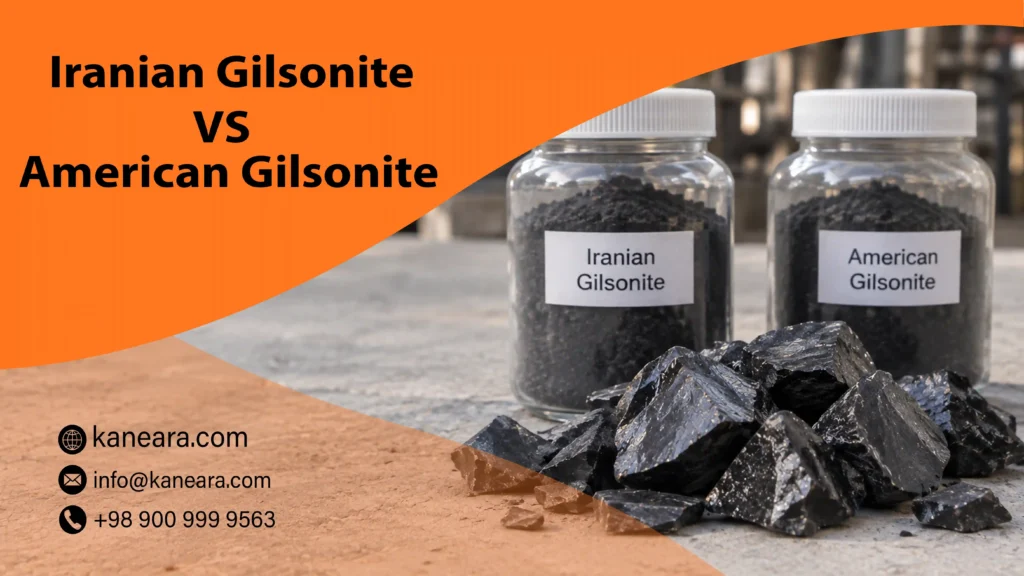
Iranian and American Gilsonite are two important sources of natural asphaltite used in drilling fluids, asphalt modification, coatings, and other industrial applications. Although both materials serve similar purposes, they differ in geological origin, chemical composition, physical properties, and supply characteristics.
The main difference between Iranian and American Gilsonite is their origin and material characteristics. American Gilsonite, particularly the branded Uintaite supplied by American Gilsonite Company, is known for its high purity, low sulfur content, and consistent specifications. Iranian Gilsonite, on the other hand, offers access to substantial natural reserves, multiple ash grades, flexible processing options, and competitive bulk supply opportunities.
For industrial buyers, the best choice depends on the required technical specifications, application, product consistency, and total procurement cost—not simply the country of origin.
Origin of Iranian and American Gilsonite
Iranian Gilsonite
Iran has substantial natural asphaltite deposits, primarily located in the western part of the country along the Zagros geological region. Kermanshah, Ilam, and Lorestan are among the main areas associated with these deposits.
A 2021 study published in Scientific Reports estimated Iran’s gilsonite reserves at approximately 15 million tonnes, representing around 15% of global reserves at the time.
Iranian Gilsonite is extracted from natural deposits and processed into different commercial grades. Depending on the source material and processing method, it is available in lump and powder forms with different ash percentages and particle sizes.
It’s established mining and processing industry makes Iran an important sourcing option for international industrial buyers.
American Gilsonite
American Gilsonite is primarily associated with the Uinta Basin in northeastern Utah, USA. The deposits occur in naturally formed hydrocarbon veins and have been commercially mined for more than a century.
American Gilsonite Company supplies Uintaite under the registered Gilsonite® brand name. Its products are recognized for their high resin content, low mineral matter, and well-established industrial applications.
The company’s mining operations and established product specifications have made American Gilsonite a recognized material in the global drilling, asphalt, and specialty chemicals industries.
Read more: What is gilsonite?
Iranian vs. American Gilsonite: Technical Comparison
The physical and chemical properties of Gilsonite directly affect its performance in industrial applications. The most important parameters include ash content, sulfur content, specific gravity, softening point, and solubility.
The following table provides a technical comparison using published reference data.
| American Gilsonite® | Iranian Gilsonite | Technical Parameter |
|---|---|---|
| Uinta Basin, Utah | Western Iran, particularly the Zagros region | Main source |
| 1.01–1.04 | 1.11 in one published Iranian sample | Specific gravity |
| Approximately 0.3% | 4.2% in one published sample | Ash / mineral matter |
| Above 99% | 81% in one published sample | Solubility in CS₂ |
| Below 1% | 4% in one published sample | Sulfur content |
| Above 300°F (approximately 149°C) | 221°C in one published sample | Softening point |
Important: These figures are reference results from different published sources, not a controlled comparison of identical commercial grades. They should not be interpreted as universal specifications for either country’s products. Actual properties vary by mine, processing method, and product grade. The softening-point figure for American Gilsonite is also a published minimum threshold, not an exact measured value.
For bulk purchasing, buyers should compare batch-specific Certificates of Analysis (COAs) using agreed testing methods.
Why Is Ash Content Important?
Ash content represents the inorganic residue remaining after Gilsonite is burned under controlled laboratory conditions. It is an important factor when determining material purity and suitability for industrial applications.
Generally, lower ash content means a higher proportion of organic material by weight. However, the lowest-ash grade is not automatically the best choice for every application.
For example:
- Low-ash grades are often preferred for applications requiring higher material purity, including certain drilling fluid and resin formulations.
- Medium-ash grades can be suitable for asphalt modification and other industrial applications, depending on the formulation.
- Higher-ash grades may provide a more economical option where the application allows higher mineral residue.
Iranian Gilsonite is commercially available in different ash grades, providing buyers with options based on their technical requirements.
Performance in Asphalt and Drilling Applications
Both Iranian and American Gilsonite can be used as functional additives in industrial formulations. Their suitability depends on the material’s properties and the performance requirements of the final product.
Asphalt Modification
Gilsonite is used to increase asphalt binder stiffness and improve resistance to permanent deformation, particularly under high-temperature conditions.
A comparative study published in Construction and Building Materials examined American and Iranian Gilsonite in asphalt modification. The researchers found that a PG 58-34 asphalt binder could reach PG 70-34 using either:
- 10% American Gilsonite
- 9.5% Iranian Gilsonite
These results demonstrate that appropriately selected Iranian Gilsonite can deliver comparable high-temperature performance in asphalt modification under specific laboratory conditions.
However, increasing binder stiffness can also affect low-temperature flexibility. Asphalt producers should therefore evaluate the complete performance grade and test the modified binder before commercial production.
Read more: Asphalt Paving Industry
Oil and Gas Drilling Fluids
In drilling operations, Gilsonite is used as a functional additive to support wellbore stability, seal microfractures, and control fluid loss.
For drilling fluid applications, buyers should pay particular attention to:
- Ash content and mineral impurities
- Softening point and thermal behavior
- Particle size distribution
- Solubility and compatibility with the mud system
- Performance under high-pressure, high-temperature (HPHT) conditions
Both Iranian and American products can be considered for drilling applications, provided that their technical specifications meet the requirements of the intended mud formulation.
Main Advantages of Iranian Gilsonite
Iranian Gilsonite offers several advantages that make it an attractive option for international bulk buyers.
1. Significant Natural Reserves
Iran’s substantial natural asphaltite resources provide a strong foundation for long-term sourcing. The concentration of deposits in western Iran supports an established mining and processing industry.
2. Flexible Ash Grades and Product Forms
Iranian producers offer different commercial specifications to meet varying industrial requirements.
Depending on the supplier, available options include:
- 5–10% ash and 10–15% ash grades
- Lump and micronized powder forms
- Different mesh sizes and particle distributions
- Customized packaging for bulk export shipments
This flexibility allows buyers to select a product based on their application rather than purchasing a single standardized grade.
3. Competitive Bulk Supply
Iranian Gilsonite can provide a cost-effective sourcing alternative, particularly for buyers requiring regular bulk shipments.
Direct access to mining and processing operations can also reduce reliance on multiple trading intermediaries. However, the final cost advantage depends on product specifications, logistics, freight, and destination requirements.
4. Processing and Quality Improvement Potential
Iranian Gilsonite is not limited to its raw mining characteristics. Processing methods can improve the quality of the final product.
For example, a 2021 study published in Scientific Reports demonstrated that flotation processing could reduce the ash content of an Iranian Gilsonite sample from approximately 15% to 4.89%.
This finding highlights the potential for producing low-ash Iranian Gilsonite through mineral processing, although actual commercial results depend on the deposit and processing operation.
5. Direct Producer and Exporter Access
International buyers can source Iranian Gilsonite directly from mining and processing companies, helping them establish long-term supply relationships.
For bulk procurement, the availability of technical documentation, pre-shipment samples, quality inspections, and export-ready packaging is essential.
Contact Us!!
Iranian vs. American Gilsonite: Which One Should You Choose?
There is no universal answer because the right product depends on the technical and commercial requirements of each project.
American Gilsonite may be preferable when:
- Very low inorganic content is a strict requirement.
- The buyer needs the established specifications of a particular Uintaite product.
- Previous formulations and performance tests are based on American Gilsonite.
Iranian Gilsonite may be preferable when:
- Buyers need different ash grades and product specifications.
- Competitive bulk procurement is a priority.
- Direct access to mining and processing facilities is important.
- An alternative source is required for drilling fluids, asphalt modification, or other industrial applications.
Ultimately, the best purchasing decision should be based on laboratory results, application-specific testing, supply reliability, and total landed cost.
Frequently Asked Questions
1- Is Iranian Gilsonite the same as American Gilsonite?
No. Both are naturally occurring asphaltite materials, but they originate from different geological deposits and can have different chemical and physical properties. Their suitability should be determined by laboratory analysis and application requirements.
2- Is American Gilsonite better than Iranian Gilsonite?
Not necessarily. American Gilsonite is recognized for its high purity and low sulfur content, while Iranian Gilsonite offers multiple commercial grades, substantial reserves, and competitive bulk sourcing opportunities. The better option depends on the required specifications and intended application.
3- What is the difference between Iranian and American Gilsonite in ash content?
Ash content varies by mine and product grade. A published Iranian sample contained approximately 4.2% ash, while American Gilsonite Company’s published data lists approximately 0.3% inorganic matter for its branded product. These figures are not directly comparable without standardized testing.
4- Can Iranian Gilsonite replace American Gilsonite in asphalt?
Yes, in certain asphalt formulations. A comparative laboratory study demonstrated that Iranian and American Gilsonite could both improve a PG 58-34 binder to PG 70-34 under the tested conditions, using different additive dosages. Project-specific binder testing is still necessary.
5- Is Iranian Gilsonite available for bulk export?
Yes. Iranian producers and exporters supply Gilsonite in lump and powder forms for international industrial markets. Availability, grades, packaging, and minimum order quantities depend on the supplier.