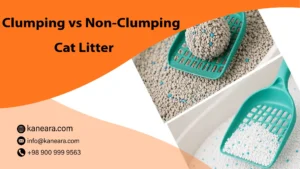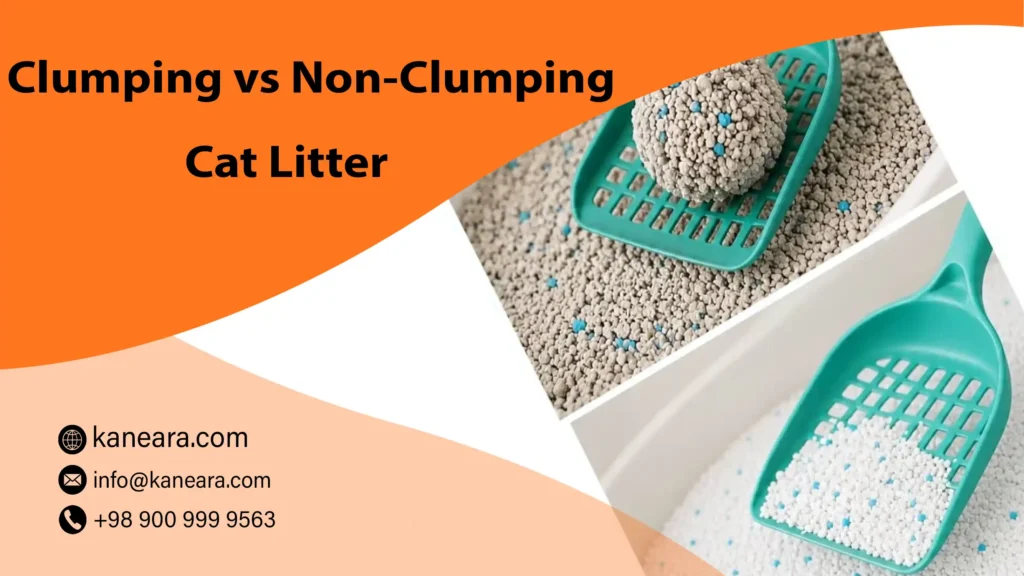
Choosing between clumping and non-clumping cat litter depends on how much convenience, moisture absorption, and cleaning efficiency you expect. Clumping cat litter forms solid clumps when exposed to urine, making waste removal easier. Non-clumping cat litter absorbs moisture without forming solid clumps and generally requires more frequent litter replacement.
Both types have advantages, but understanding their differences can help cat owners choose the right option.
What Is Clumping Cat Litter?
Clumping cat litter is designed to absorb urine and form solid, scoopable clumps. When a cat urinates, the litter binds together around the moisture, allowing owners to remove the soiled material without replacing all the litter.
Most traditional clay-based clumping litters use sodium bentonite because of its high water absorption and swelling capacity.
Key advantages of clumping cat litter:
- Easy waste removal: Solid clumps can be scooped out without removing unused litter.
- Convenient maintenance: Daily cleaning is relatively straightforward.
- Moisture management: Urine is concentrated into removable clumps.
- Extended usability: Remaining clean litter can stay in the tray between complete changes.
However, clumping litter needs regular scooping, and dust levels and clump strength can vary depending on the product’s formulation and quality.
What Is Non-Clumping Cat Litter?
Non-clumping cat litter absorbs urine but does not form solid clumps. Instead, moisture is absorbed throughout the litter granules, and the used material remains in the litter box until it is replaced.
Calcium bentonite is commonly used in mineral-based non-clumping cat litter because of its absorbent properties and lower natural swelling capacity compared with sodium bentonite.
Key advantages of non-clumping cat litter:
- Moisture absorption: Absorbs urine without forming solid masses.
- Simple composition: Often manufactured using naturally absorbent mineral granules.
- Suitable for different preferences: Some cats and owners prefer its texture and handling characteristics.
Its main limitation is that urine-soaked litter cannot be removed as easily in individual clumps. Therefore, the entire litter bed generally needs more frequent replacement.
Read more: What is bentonite cat litter?
Clumping vs Non-Clumping Cat Litter: Key Differences
| Non-Clumping Cat Litter | Clumping Cat Litter | Feature |
|---|---|---|
| Absorbs and retains moisture | Absorbs and binds moisture into clumps | Moisture absorption |
| Requires more frequent full replacement | Individual clumps can be scooped out | Urine removal |
| Regular full litter changes | Daily scooping | Maintenance |
| Calcium bentonite | Sodium bentonite | Common clay material |
| Replaces the used litter bed | Removes soiled areas separately | Waste management |
| Simple moisture absorption | Easier daily cleaning | Main advantage |
The main difference is how each type handles moisture. Clumping litter binds wet material together, while non-clumping litter absorbs moisture without creating removable clumps.
Which Cat Litter Is Better for Your Cat?
There is no single best option for every cat. The right choice depends on your cat’s age, preferences, and your cleaning routine.
Clumping litter may be a better choice if:
- You prefer convenient daily cleaning.
- You want to remove urine-soaked areas separately.
- Your cat is comfortable with fine-textured litter.
Non-clumping litter may be a better choice if:
- • You prefer a traditional absorbent litter.
- • Your cat is already accustomed to non-clumping granules.
- • You want to use a non-clumping option for a young kitten that may investigate or ingest litter.
For very young kittens, choosing a non-clumping product can be a useful precaution because swallowing clumping litter may create digestive concerns. Consult a veterinarian when selecting litter for young or vulnerable cats.
Regardless of the type, most cats benefit from clean, unscented litter with a comfortable texture. Their individual preferences should always be considered.
Read more: How clumping performance affects cat litter quality
Sodium Bentonite vs Calcium Bentonite in Cat Litter
The difference between sodium and calcium bentonite is particularly important in clay-based cat litter production.
Sodium bentonite has a higher swelling capacity when exposed to water. Its particles absorb moisture and bind together, making it suitable for producing clumping cat litter.
Calcium bentonite provides good moisture absorption but generally has lower natural swelling capacity. It is commonly processed into granular products for non-clumping cat litter.
However, commercial litter formulations can combine different clay grades or other ingredients to achieve specific performance characteristics. Therefore, the final clumping performance depends on the complete formulation, not only the clay classification.
Contact Us!!
Conclusion
Choosing the right bentonite grade is essential for producing consistent cat litter. Manufacturers need to consider moisture absorption, swelling capacity, granule size, dust content, and the desired clumping performance.
Frequently Asked Questions
1- Is clumping cat litter better than non-clumping cat litter?
Clumping cat litter is generally more convenient for daily cleaning because urine-soaked material can be removed separately. However, the best choice depends on the cat’s preferences and the owner’s maintenance routine.
2- Does non-clumping cat litter absorb urine?
Yes. Non-clumping cat litter absorbs urine into its granules but does not form solid clumps. The used litter must be replaced regularly to maintain cleanliness.
3- Is sodium bentonite used for clumping cat litter?
Yes. Sodium bentonite is widely used in clumping cat litter because of its high swelling and water absorption capacity, which help form solid clumps.
4- Is calcium bentonite used for non-clumping cat litter?
Yes. Calcium bentonite is commonly used in non-clumping mineral cat litter because it absorbs moisture without the same degree of natural swelling as sodium bentonite.
5- How often should cat litter be cleaned?
Solid waste should be removed daily. Clumping litter also requires daily removal of urine clumps, while non-clumping litter needs regular replacement. The frequency of complete litter changes depends on the product, number of cats, and usage.