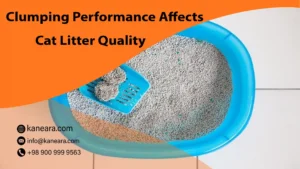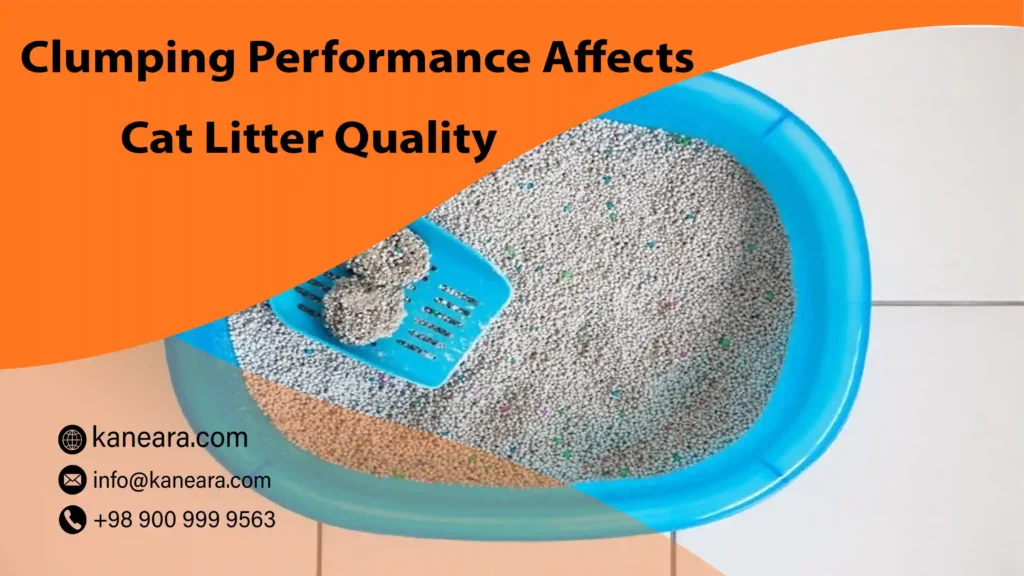
When a cat owner scoops the litter box, they expect one simple thing: firm, clean clumps that lift out easily without crumbling. Behind that everyday action lies a complex interaction of mineral structure, moisture absorption, and material engineering.
The reality is that clumping performance is one of the most critical quality indicators in cat litter, and understanding the factors affecting clumping performance is essential for manufacturers, distributors, and bulk buyers alike.
For companies involved in mineral processing and industrial raw materials, such as Kaneara, evaluating cat litter from a performance perspective goes far beyond appearance or price.
Buyers comparing sourcing options often look not only at laboratory data but also at overall bentonite price, since raw material cost directly influences large-scale production decisions. It requires a technical understanding of how structure, particle size, and absorption capacity determine real-world functionality.
This article explores how clumping performance shapes overall product quality, how clumping performance is evaluated, and what professional buyers should look for when sourcing high-performance cat litter materials.
What Is Clumping in Cat Litter?
Clumping refers to the ability of cat litter particles to bind together when exposed to moisture—primarily urine—forming a solid mass that can be easily removed. This process depends heavily on the internal structure of the material and its interaction with liquid.
Most clumping litters are based on bentonite clay, particularly sodium bentonite, which contains the mineral Montmorillonite. This mineral has a layered structure that expands significantly when it absorbs moisture. As liquid penetrates the particles, they swell and interlock, creating a compact clump.
However, not all clumping behavior is equal. The cat litter clumping behavior under moisture varies depending on:
- Mineral composition
- Granule size distribution
- Density and porosity
- Moisture absorption rate
Strong clumping results in firm, scoop able masses. Weak clumping leads to breakage, residue, odor retention, and dissatisfied end users.
Why Strong Clumping Matters for End Users
From a consumer perspective, clumping quality directly affects daily convenience. From an industrial and commercial perspective, it affects brand reputation, return rates, and long-term customer retention.
High-quality clumping provides:
- Easy removal with minimal waste
- Reduced odor buildup
- Longer product lifespan in the litter box
- Cleaner litter box environment
Poor clumping performance, on the other hand, leads to crumbling clumps that disintegrate during scooping. This increases contamination of the remaining litter and reduces overall efficiency. In retail markets, this often results in negative reviews and loss of repeat customers.
For bulk buyers and private-label producers operating in international markets, sourcing decisions often involve evaluating suppliers offering cat litter wholesale for export, where consistency in clump strength and mineral quality is critical across large shipment volumes.
Evaluation of cat litter performance must therefore focus on clump strength, integrity, and consistency—not just on absorption claims on packaging.
Read more: What is bentonite cat litter?
Key Factors That Influence Clumping Quality
Understanding the factors affecting clumping performance requires looking at both raw material properties and processing methods. Two technical parameters play the most decisive roles: mineral structure and moisture absorption capacity.
Mineral Structure
The structure and absorption behavior of cat litter are fundamentally controlled by the type of clay used and its mineralogical composition. In global markets, buyers frequently compare formulations and analyze the difference between cat litter materials, particularly when choosing between sodium bentonite, calcium bentonite, silica-based litters, or plant-based alternatives.
Sodium bentonite, rich in Montmorillonite, is widely preferred because of its swelling capacity. When moisture contacts the clay, water molecules enter the interlayer spaces, causing expansion. This swelling effect allows adjacent particles to bind tightly.
Calcium bentonite, by contrast, has a lower swelling index and typically produces weaker clumps unless chemically modified.
Key structural characteristics influencing clumping:
- Swelling index
- Cation exchange capacity (CEC)
- Particle shape and surface area
- Degree of activation (natural vs. activated bentonite)
A higher swelling index generally correlates with stronger and more cohesive clumps. However, excessive swelling can reduce flowability during production, so balance is essential.
For mineral suppliers, laboratory analysis such as XRD (X-ray diffraction) and swelling index testing provides critical insights into clumping potential before production even begins.
Moisture Absorption
Moisture absorption rate determines how quickly and efficiently clumps form. The cat litter clumping behavior under moisture depends not only on how much liquid the material can absorb but also how fast it does so.
If absorption is too slow, urine may spread before clumping initiates, causing large, fragile clumps. If absorption is rapid and evenly distributed, compact spherical clumps form with minimal breakage.
Important variables include:
- Granule size distribution
- Bulk density
- Internal porosity
- Surface moisture content at packaging
Fine particles generally enhance binding but may increase dust levels. Coarser granules reduce dust but can weaken clump cohesion if not balanced properly.
For industrial buyers, this is where cat litter performance testing methods become essential. Controlled moisture application tests simulate real-use conditions and measure:
- Time to clump formation
- Clump compressive strength
- Breakage resistance during handling
These tests provide measurable quality indicators in cat litter that go beyond marketing descriptions.
How Clumping Performance Is Evaluated
Professionally assessing litter quality requires standardized procedures. While consumer testing is subjective, industrial evaluation relies on repeatable laboratory protocols.
Common cat litter performance testing methods include:
- Swelling Index Test – Measures volume expansion after water exposure.
- Clump Strength Test – Assesses resistance to compression and breakage.
- Moisture Absorption Rate Analysis – Determines speed of liquid uptake.
- Dust Content Analysis – Evaluates airborne particle levels.
- Sieve Analysis – Measures particle size distribution consistency.
Among these, clump strength is the most direct indicator of real-world usability. A high-quality product forms compact clumps that remain intact during scooping, transport, and disposal.
The process of how clumping performance is evaluated also includes simulating repeated wetting cycles. This helps determine how residual contamination affects future clump formation.
Quality Indicators in Cat Litter
Clumping performance is closely linked to broader quality indicators in cat litter, including:
- Odor control efficiency
- Low dust generation
- Consistent granule size
- Mechanical durability during shipping
- Moisture stability during storage
For exporters and wholesalers, consistency across batches is particularly critical. Variations in raw mineral composition or processing parameters can significantly alter performance.
Therefore, reliable sourcing from controlled mineral deposits and maintaining strict processing standards are essential for long-term quality stability.
How Buyers Can Evaluate Clumping Performance
For B2B buyers, distributors, and private label brands, selecting a supplier requires technical validation—not just visual inspection.
Here are practical steps to evaluate clumping quality effectively:
First, request detailed laboratory reports including swelling index and moisture absorption data. Second, conduct independent clump strength testing using standardized liquid volumes. Third, examine particle size distribution consistency through sieve analysis.
It is also advisable to perform real-use simulations by applying measured amounts of liquid and assessing:
- Clump formation speed
- Cohesion after 5–10 minutes
- Resistance during mechanical agitation
Professional buyers should consider both raw mineral characteristics and finished product behavior. The synergy between mineral structure and processing methods determines final performance.
For companies engaged in mineral extraction and processing, optimizing the factors affecting clumping performance at the source level provides a competitive advantage in global markets.
The Strategic Importance of Material Selection
Selecting high-grade bentonite deposits with stable mineral composition reduces performance variability. Mining location, geological formation, and beneficiation processes all influence final clumping behavior.
Advanced processing techniques such as controlled drying, precise granulation, and moisture stabilization improve consistency and reduce dust levels.
When raw material integrity aligns with optimized processing, the result is predictable clumping behavior, improved customer satisfaction, and stronger brand credibility.
Conclusion
Clumping performance is not a minor feature—it is the defining factor of cat litter quality. From mineral structure to moisture absorption dynamics, multiple technical parameters determine how effectively a product performs in real-world conditions.
Understanding the factors affecting clumping performance allows manufacturers and bulk buyers to make informed sourcing decisions. By applying standardized evaluation methods and focusing on measurable quality indicators in cat litter, businesses can ensure reliable performance, reduced complaints, and stronger market positioning.
For mineral suppliers and industrial buyers alike, investing in proper testing and material selection is the foundation of long-term success in the cat litter industry.
Frequently Asked Questions
1. What are the main factors affecting clumping performance?
The primary factors affecting clumping performance include mineral composition, swelling index, moisture absorption rate, particle size distribution, and processing methods. Sodium bentonite with high swelling capacity typically delivers stronger clumps.
2. How clumping performance is evaluated in laboratory settings?
How clumping performance is evaluated involves swelling index measurement, clump strength testing, moisture absorption analysis, and sieve analysis to ensure consistent particle distribution.
3. Why is mineral structure important in cat litter?
The cat litter material structure and absorption behavior depend heavily on mineral composition. Minerals with layered structures expand when exposed to moisture, creating cohesive clumps.
4. What is cat litter clumping behavior under moisture?
Cat litter clumping behavior under moisture refers to how particles react when exposed to liquid—specifically how quickly they absorb moisture and how firmly they bind together.
5. What are the most important quality indicators in cat litter?
Key quality indicators in cat litter include clump strength, low dust levels, odor control efficiency, particle size consistency, and moisture stability during storage.