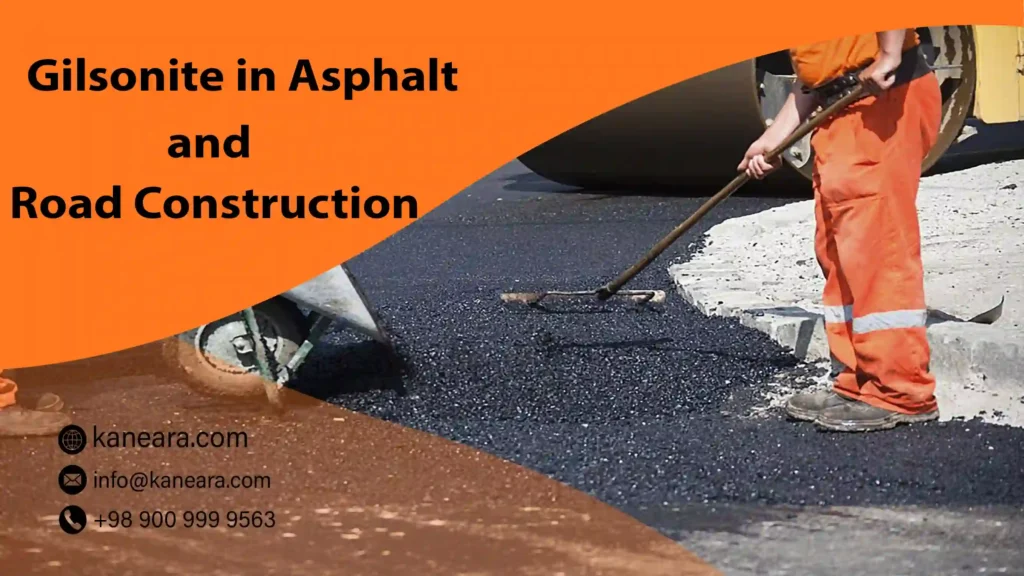
Gilsonite is a naturally occurring solid hydrocarbon, also known as natural asphalt, that can be used to modify asphalt binders and asphalt mixtures. In road construction, its main value is improving high-temperature stiffness, resistance to permanent deformation, and, under suitable mix conditions, overall pavement performance.
Research has shown that natural asphalt modifiers such as Gilsonite can improve rutting resistance and high-temperature performance when the material is used at an appropriate dosage. However, the result depends on factors such as the base asphalt binder, modifier content, aggregate properties, climate, traffic conditions, and mix design.
For asphalt producers, pavement engineers, and contractors, the key question is not simply whether Gilsonite is beneficial, but which asphalt properties it can improve and when its use is technically appropriate.
What Are the Benefits of Gilsonite in Asphalt?
The benefits of Gilsonite are mainly associated with changes in the stiffness, rheology, strength, and deformation resistance of asphalt. However, performance improvements are not automatic and should be evaluated through laboratory testing and appropriate mix design.
1. Improved Resistance to Rutting
One of the most consistently reported benefits of Gilsonite in asphalt is improved resistance to rutting.
Rutting is the permanent deformation that develops in asphalt pavements under repeated traffic loading, particularly at elevated pavement temperatures. Gilsonite can increase binder stiffness and improve resistance to permanent deformation, helping the asphalt mixture maintain its shape under heavy traffic.
Laboratory research has reported significant improvements in rutting resistance in Gilsonite-modified asphalt binders and mixtures.
This makes Gilsonite particularly relevant for pavements exposed to high temperatures or heavy and repetitive traffic loads.
2. Higher High-Temperature Performance
Asphalt becomes softer as temperatures increase. Excessive softening can reduce pavement stability and make the surface more vulnerable to deformation.
Adding an appropriate amount of Gilsonite can increase binder stiffness and viscosity, improving its resistance to flow at elevated temperatures. Laboratory research has reported improvements in high-temperature rheological performance after modification.
For projects in hot climates, this property can be valuable when high-temperature deformation is one of the major pavement concerns.
3. Increased Asphalt Mixture Stability and Strength
Changes in binder properties can also affect the mechanical behavior of the asphalt mixture.
Depending on the formulation, modified mixtures may show improvements in stability, resilient modulus, and resistance to deformation. These properties can contribute to better structural performance under repeated traffic loads.
However, the degree of improvement is not the same for every mixture. The result depends on the base binder, modifier dosage, aggregate structure, and production conditions.
4. Potential Improvement in Moisture Resistance
Water can contribute to asphalt deterioration by weakening the bond between the binder and aggregate. This process, commonly known as moisture damage or stripping, can reduce pavement performance over time.
Some studies have found that natural asphalt modification can improve binder-aggregate adhesion and moisture resistance in specific formulations.
This should not be interpreted as a guaranteed improvement for every mix. Moisture resistance should be verified through appropriate laboratory testing, particularly for projects exposed to significant rainfall or water infiltration.
5. Improved Pavement Performance under Heavy Traffic
Heavy truck traffic places repeated loads on flexible pavements. If the asphalt binder is too susceptible to deformation at high temperatures, the pavement may develop rutting and other forms of distress.
Because Gilsonite can improve stiffness and rutting resistance, it can be useful in asphalt mixtures designed for heavily trafficked roads. Its value is particularly relevant when the main performance challenge is permanent deformation at elevated temperatures.
Read more: What is gilsonite
How Is Gilsonite Used in Asphalt?
Gilsonite can be incorporated into asphalt using either a wet or dry modification process.
- Wet-Process Gilsonite Modification: In the wet process, Gilsonite is blended directly with the asphalt binder before the binder is used in the asphalt mixture. This approach allows the effect of Gilsonite on binder properties to be evaluated directly through tests such as viscosity, dynamic shear rheometer (DSR), and other rheological measurements. Because Gilsonite increases binder viscosity, the mixing and handling conditions need to be considered carefully during formulation.
- Dry-Process Gilsonite Modification: In the dry process, Gilsonite is incorporated into the asphalt mixture during the mixing stage, typically together with the aggregate. Research reviews identify the dry process as another established approach for using Gilsonite as an asphalt mixture modifier. The choice between wet and dry modification depends on the asphalt plant, equipment, target performance, material characteristics, and mix design.
Does Gilsonite Improve Asphalt in Cold Weather?
Not necessarily.
One of the most important considerations is that increasing asphalt stiffness can provide a benefit at high temperatures but may create challenges at low temperatures.
Excessive stiffness can reduce the ability of a pavement to accommodate thermal contraction, potentially increasing susceptibility to low-temperature cracking. Some studies have therefore found that increasing modifier content can improve rutting resistance while negatively affecting certain low-temperature or fatigue properties.
This means the optimum content should not be selected using a fixed percentage for every project. Climate, binder grade, traffic, and the target performance of the pavement all need to be
considered.
Factors That Affect Gilsonite Performance
The performance of modified asphalt depends on several variables rather than on the additive alone.
- Gilsonite grade: Different materials can have different physical and chemical characteristics.
- Dosage: Increasing the amount of Gilsonite generally increases stiffness and viscosity, but higher concentrations can also negatively affect certain low-temperature or fatigue properties.
- Base asphalt binder: The response of the modified binder depends on the properties of the original asphalt.
- Climate: High-temperature applications may benefit more from increased stiffness, while cold climates require additional evaluation.
- Traffic loading: Heavy and repetitive traffic increases the importance of resistance to permanent deformation.
- Mix design and production conditions: Mixing temperature, blending procedure, aggregate properties, and overall formulation can significantly influence the final performance.
Because of these variables, laboratory testing is an important part of determining whether a particular product and dosage are suitable for a specific pavement application.
Is Gilsonite a Good Choice for Road Construction?
Gilsonite can be a good asphalt modifier when the pavement design requires greater stiffness and resistance to permanent deformation, particularly under high-temperature and heavy-traffic conditions.
However, the material should not be presented as a universal solution for every road. Research indicates that the benefits of Gilsonite are highly dependent on dosage and formulation, and excessive stiffness can create disadvantages at lower temperatures.
A technically appropriate evaluation should therefore consider the project’s climate, traffic loading, base binder, aggregate, target performance grade, and laboratory test results.
Key Benefits of Gilsonite in Asphalt
When appropriately formulated, the main benefits include:
- Improved resistance to rutting and permanent deformation
- Higher stiffness and high-temperature performance
- Potential improvement in asphalt mixture stability
- Potential improvement in binder-aggregate adhesion
- Suitability for some heavy-traffic applications
- Compatibility with wet- and dry-process modification
The actual performance depends on dosage, material characteristics, binder type, climate, and mix design.
Conclusion
The main benefits of Gilsonite in asphalt are associated with increased binder stiffness, improved high-temperature performance, and greater resistance to rutting and permanent deformation.
These properties can make it useful for selected road construction and asphalt applications, particularly where heavy traffic and elevated pavement temperatures create a high risk of deformation.
At the same time, modification must be carefully controlled. Higher stiffness is not always beneficial, and excessive dosage can affect low-temperature and fatigue performance.
For this reason, the most reliable approach is to evaluate the material as part of the complete asphalt mix design and determine the appropriate grade and dosage according to climate, traffic, binder properties, aggregate characteristics, and laboratory performance results.
Frequently Asked Questions (FAQs)
1- How is Gilsonite used in road construction?
Gilsonite is a natural asphalt mineral used as a modifier to improve durability, flexibility, and weather resistance in asphalt pavements. It can be used in hot and cold mix asphalt as well as surface treatments.
2- How does Gilsonite improve road longevity?
Gilsonite enhances the elasticity and cohesion of asphalt mixtures, reducing cracking, rutting, and deformation under traffic stress, which extends the lifespan of pavements.
3- Is Gilsonite environmentally friendly?
Yes, gilsonite is a natural hydrocarbon and an eco-friendly alternative to synthetic asphalt modifiers, reducing the environmental impact of road construction projects.
4- Can Gilsonite be used in industries other than road construction?
Absolutely. Gilsonite is widely used in the oil and gas industry, particularly as a lost circulation material in drilling operations, as well as in coatings, inks, and adhesives.
5- How does gilsonite improve the quality of asphalt pavements?
Gilsonite enhances asphalt by increasing its flexibility, cohesion, and resistance to cracking and rutting. This results in stronger, longer-lasting pavements that perform well under heavy traffic and extreme weather conditions.