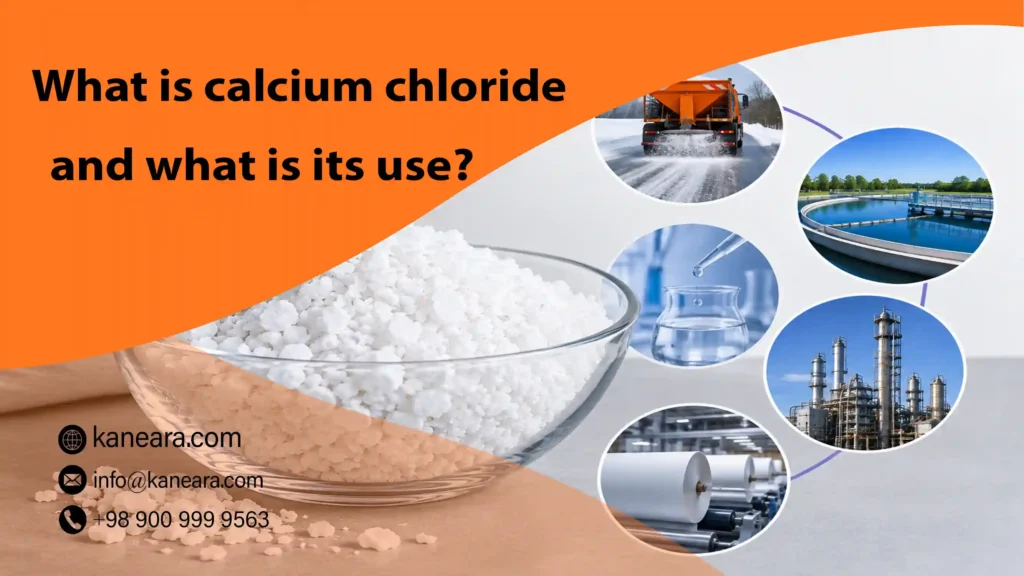
Calcium chloride is a versatile chemical compound widely utilized across multiple sectors due to its unique properties. In this article, we will explore what calcium chloride is, how it works, and detail the extensive uses of calcium chloride in fields ranging from food production to agriculture and medicine.
We will also discuss its hygroscopic properties, moisture control abilities, and its role as a deicing agent. By the end of this guide, you will fully understand every major application of calcium chloride and why this compound is indispensable in modern industry.
What is Calcium Chloride?
Calcium chloride (CaCl₂) is an inorganic salt that appears as a white crystalline solid. It is highly soluble in water and has a strong affinity for moisture, a property known as hygroscopicity.
This makes calcium chloride an excellent compound for moisture control and other industrial applications. It also releases heat when dissolved in water, an exothermic reaction, which is utilized in various processes that require heat generation.
Calcium chloride is produced mainly by the reaction of calcium carbonate (limestone) with hydrochloric acid, or as a byproduct of the Solvay process for producing sodium carbonate. Its purity and formulation can vary depending on the intended application.
How Does Calcium Chloride Work?
The primary mechanism behind most calcium chloride uses is its hygroscopic properties and chemical reactivity. When exposed to moisture, it absorbs water molecules from the environment, allowing it to control humidity, stabilize surfaces, and prevent ice formation.
Its exothermic nature makes it highly effective for applications where rapid warming is needed, such as melting ice on roads.
Main Uses of Calcium Chloride
Calcium chloride has versatile calcium chloride uses in industry, food, medicine, agriculture, and daily life. It serves as a deicing agent, firming and stabilizing foods, treating low calcium levels, improving soil and crop growth, and controlling moisture in pools or dehumidifiers. Its hygroscopic properties and exothermic reaction make it essential in many applications.
Industrial applications of calcium chloride
Industrial calcium chloride plays a crucial role in modern industrial operations due to its strong moisture absorption capability and its ability to significantly reduce the freezing point of water.
These functional characteristics make it one of the most versatile industrial chemicals, supporting a wide range of calcium chloride uses in industry, particularly in infrastructure-related applications, which we have examined below:
1. Deicing and Dust Control
One of the most common calcium chloride uses in industry is as a deicing agent. Roads, highways, and airport runways often face hazardous conditions during winter.
Calcium chloride lowers the freezing point of water, effectively melting ice and snow. Unlike sodium chloride, it works at lower temperatures, making it more effective in extreme winter conditions.
Additionally, its moisture-absorbing capabilities help reduce dust on unpaved roads. By attracting moisture from the air, calcium chloride keeps the ground damp, reducing airborne dust and improving safety and visibility.
2. Construction Industry
In the construction sector, Industrial calcium chloride is used to accelerate the setting time of concrete and reduce water content in mixtures. Its exothermic reaction promotes faster curing, allowing construction projects to progress quickly, even in cold weather.
Calcium Chloride Uses in Food
Calcium chloride is widely used in the food industry for its stabilizing and firming properties. Some of its common applications include:
- Cheese Production: Acts as a coagulant in the production of cheese, improving texture and consistency.
- Canning and Pickling: Helps maintain firmness in canned vegetables and pickles.
- Beverages: Used to enhance the mineral content in soft drinks and bottled water.
- Firming Agent: Maintains texture in tofu and other plant-based products.
These applications are safe for consumption, and calcium chloride is recognized as GRAS (Generally Recognized as Safe) by food safety authorities.
Calcium Chloride Uses in Agriculture
Calcium chloride also has significant applications in agriculture:
- Soil Amendment: Provides calcium to crops, improving soil structure and nutrient availability.
- Fertilizer Component: Enhances plant growth by increasing calcium levels in the soil.
- Post-Harvest Treatment: Helps maintain firmness and shelf life of fruits like apples and tomatoes.
- Pest Control: Can be used in certain formulations to deter pests naturally.
Its ability to control moisture in soil and storage environments makes it a valuable agricultural tool.
Why Choose Calcium Chloride?
Calcium chloride is a cost-effective, versatile, and safe compound. The combination of its hygroscopic nature, deicing ability, and exothermic reaction makes the use of calcium chloride practically limitless. Companies worldwide rely on high-quality CaCl2 to meet their production and operational needs.
Conclusion
Calcium chloride is an indispensable chemical with diverse applications across multiple industries. Its ability to absorb moisture, control ice, and participate in exothermic reactions makes it a highly valuable compound.
From food production to medical applications, agriculture, construction, and even daily household use, the calcium chloride uses are extensive and continually growing.
For businesses looking for a reliable supply, high-quality calcium chloride from reputable suppliers like Kaneara ensures consistent performance and safe application.
Frequently Asked Questions (FAQs)
1- What is calcium chloride used for?
Calcium chloride is used in industries such as food production, construction, agriculture, medicine, and daily life for purposes like deicing, moisture control, soil amendment, and electrolyte supplementation.
2- How does calcium chloride work?
It works through its hygroscopic properties by absorbing water and through exothermic reactions that release heat when dissolved, making it effective for ice melting, moisture control, and accelerating chemical reactions.
3- Is calcium chloride safe for food use?
Yes. Calcium chloride is GRAS-certified and is commonly used as a firming agent in canned vegetables, cheese, tofu, and beverages.
4- What industries benefit most from calcium chloride?
Absolutely. It improves soil calcium levels, enhances plant growth, extends the shelf life of fruits, and helps manage soil moisture effectively.