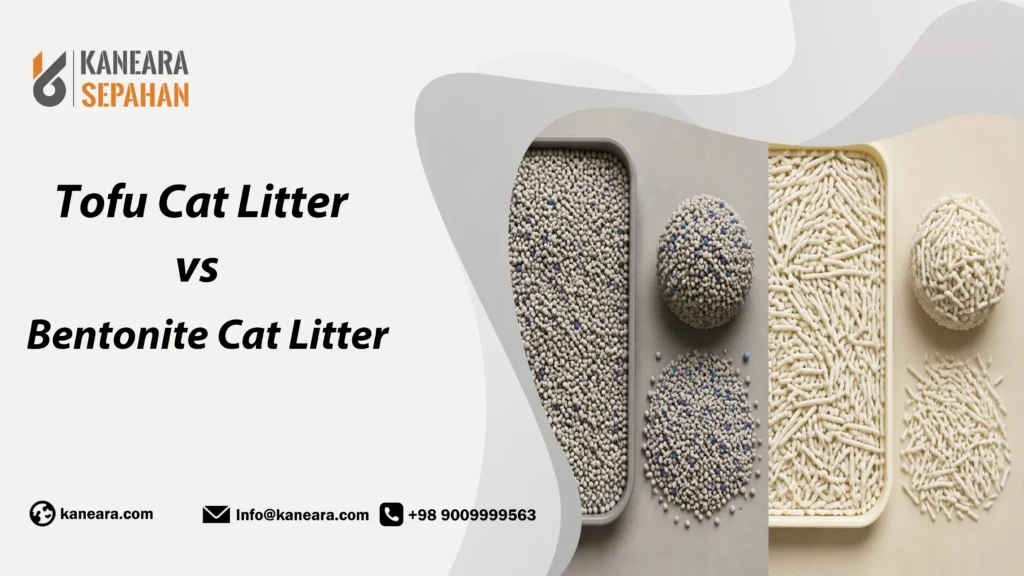
Bentonite cat litter wins on clumping strength, odor lock, and price per kilogram, making it the stronger choice for multi-cat households and bulk buyers. Tofu litter wins on dust-free handling, light weight, and biodegradability, making it better suited to single-cat, eco-focused homes. Neither wins every category — the right pick depends on what you’re optimizing for.
If you’ve searched bentonite vs tofu cat litter and landed on ten different “it depends” articles, you’re not alone. Both litters solve the same problem — trapping waste and odor — but they get there through completely different materials, and that shows the moment you scoop the tray.
Bentonite Cat Litter vs Tofu
Here’s how the two stack up, feature by feature:
| Feature | Bentonite Cat Litter | Tofu Cat Litter |
| Clumping strength | Very strong, hard clumps | Softer, can crumble |
| Dust level | Moderate (lower with washed, granulated grades) | Very low |
| Odor control | Strong — binds ammonia on contact | Good — relies on low dust + mild natural scent |
| Weight | Heavy | Lightweight |
| Biodegradable | No | Yes |
| Flushable | No | Small amounts, depending on local plumbing |
| Cost per kg (bulk) | Lower | Higher |
| Best for | Multi-cat homes, bulk/wholesale buyers | Single-cat, eco-focused, small households |
Comparing the advantages and disadvantages of tofu and bentonite cat litter
Tofu and bentonite cat litter each have advantages and disadvantages that buyers should consider in order to make the right choice. Below, we have thoroughly reviewed the benefits of bentonite cat litter and tofu, along with their disadvantages.
Pros of Bentonite Cat Litter
- Forms hard, one-piece clumps that scoop cleanly, even in busy multi-cat trays
- High absorbency — premium sodium bentonite can absorb several times its own weight in liquid
- Binds ammonia through natural cation exchange, so odor control doesn’t rely on added fragrance
- Stable, high-volume supply and lower landed cost, which matters for retailers and private-label brands
- Performance doesn’t shift with humidity or temperature
Pros of Tofu Cat litter
- Lightweight and easy to pour, lift, and change
- Low dust, which suits kittens or households with respiratory sensitivities
- Biodegradable and flushable in small quantities where local plumbing allows
- Made from food-grade soy by-product, so low risk if a cat licks a stray granule
Cons of Bentonite Cat litter
- Heavier to carry, store, and ship than plant-based litters
- Can produce dust when poured or scooped, though low-dust, granulated grades reduce this significantly
- Not biodegradable and can’t be flushed — goes in the trash
Cons of Tofu Cat litter
- Clumps are softer and can break apart under heavy use
- Mildly hygroscopic — can soften or pick up odor if stored somewhere humid
- Usually more expensive per kilogram than bentonite
- Supply is tied to soybean processing by-products, so bulk pricing is less predictable year-round
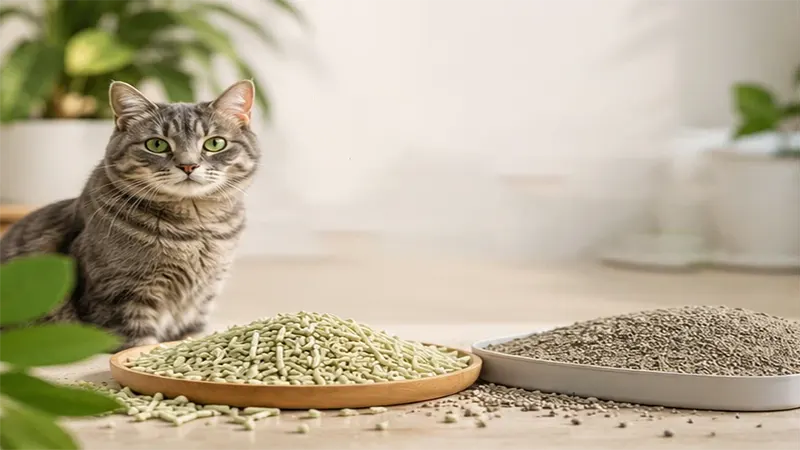
Which Litter Wins: Tofu Cat Litter vs Bentonite
For pet stores, private-label brands, and multi-cat households ordering in volume, the tofu cat litter vs bentonite decision usually comes down to cost stability and consistency.
Because bentonite is a mined mineral rather than an agricultural by-product, suppliers can hold bulk cat litter specifications and pricing steady across large, repeat shipments — something tofu litter, tied to soybean pulp availability, has a harder time guaranteeing.
For a retailer stocking pallets rather than bags, that predictability often outweighs tofu’s advantages in dust and weight.
Is Bentonite Litter Safer or Tofu for Kittens?
Both are generally safe once kittens are past the mouthing stage. Tofu is the lower-risk pick for very young kittens still exploring with their mouths, since it’s food-grade and produces almost no dust to inhale.
Bentonite is safe for adult cats and most kittens in normal use, but breeders often hold off on clumping clay litter until a litter is fully weaned and no longer swallowing bedding material.
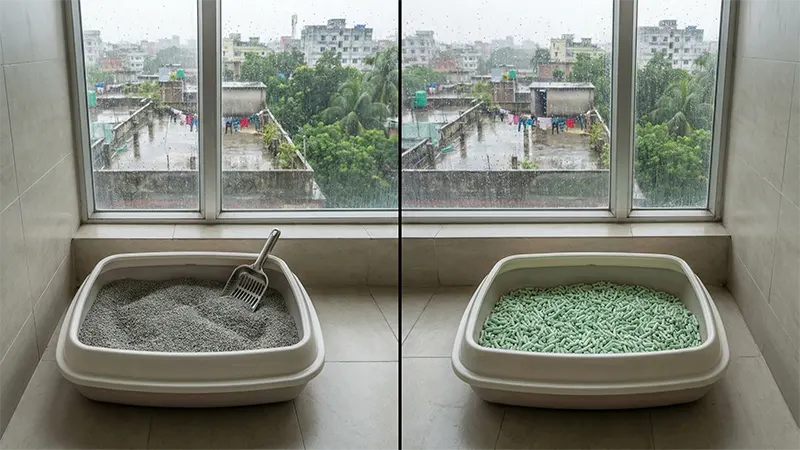
Final Verdict: Bentonite vs Tofu Cat Litter
There’s no single winner in the tofu litter vs bentonite debate — it depends on what you’re solving for. If you’re running a multi-cat household, sourcing for a pet store, or placing a bulk order where cost and consistency matter, bentonite is the stronger pick.
If you’re managing one cat in a small space and prioritize low dust, light weight, and biodegradability over price, tofu wins. Many households actually run both — a bentonite base for clumping strength with a thin tofu top layer for dust control.
Frequently Asked Questions
1. Is bentonite or tofu cat litter better for odor control?
Bentonite typically locks in odor faster because its clay structure binds ammonia as soon as it gets wet, whereas tofu relies on low dust and a mild natural scent. Both work well with daily scooping; bentonite has the edge in multi-cat trays.
2. Can I mix bentonite and tofu cat litter?
Yes. A common setup is a bentonite base for clumping strength topped with a thin layer of tofu litter for lower dust and lighter tracking. It’s not a manufactured blend, just a layering method many owners use.
3. How do I switch my cat from bentonite to tofu litter (or the other way around)?
Make the change gradually over 7–10 days, mixing in a little more of the new litter each time. Cats are sensitive to sudden litter changes and may avoid the box altogether, so a slow blend gives them time to adjust to the new texture and clumping feel.
4. Is tofu cat litter flushable?
Small amounts can usually be flushed, but this depends on local plumbing and wastewater rules, so check before making it a habit. Bentonite should never be flushed — it will clump inside pipes.
5. Which is cheaper, bentonite or tofu cat litter, per kilogram?
Bentonite is almost always cheaper per kilogram, at both retail and bulk pricing, since it’s a mined mineral rather than a processed agricultural by-product.