Selecting bentonite for an industrial process requires more than choosing a material by name. The right grade depends on the job it must perform, such as controlling drilling-fluid viscosity, absorbing liquids, binding particles, removing impurities, or forming a low-permeability barrier. Buyers should evaluate application-specific performance, particle size, processing method, and test results before approving a grade for production.
The key principle is simple: select bentonite according to the required process performance, not a general claim that it is suitable for industrial use.
Why Bentonite Selection Depends on the Application
Bentonite is used in different industrial processes because its mineral composition and processing can produce different functional properties. Depending on the grade, it may swell in water, form a suspension, bind particles, absorb liquids, or adsorb selected impurities.
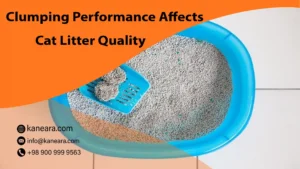
However, these properties are not equally important in every application. A drilling-fluid formulation may require reliable viscosity and fluid-loss control, while a litter manufacturer may prioritize absorption, clumping performance, and particle-size consistency. An oil refinery evaluating activated bleaching clay needs to consider adsorption performance and filtration behavior instead.
This is why two bentonite products can have the same general mineral name but perform differently under actual operating conditions.
How to Match Bentonite to Different Industrial Requirements
The first step is to identify the function bentonite must perform in the process. The next is to determine which measurable properties demonstrate that the material can deliver the required result.
| Industrial application | Main performance requirement | What to evaluate |
| Drilling fluids | Stable rheology, suspension, and fluid-loss control | Viscosity, yield, filtration loss, residue, and hydration behavior |
| Horizontal directional drilling (HDD) | Reliable fluid performance under changing ground conditions | Yield, viscosity, fluid loss, gel behavior, and compatibility with the drilling-fluid system |
| Cat litter manufacturing | Liquid absorption and, where required, effective clump formation | Absorption capacity, clump strength, particle-size distribution, dust, and moisture |
| Edible oil refining | Removal of color bodies and other targeted impurities | Bleaching performance, oil retention, filtration rate, and residual acidity where relevant |
| Foundry molding | Consistent bonding of molding sand | Green compression strength, wet tensile strength, permeability, and behavior under operating conditions |
| Geotechnical sealing | Limiting water movement through a barrier | Swelling behavior, hydraulic conductivity, and compatibility with the site water |
These are starting points rather than universal specifications. The required limits depend on the process, equipment, operating conditions, and applicable technical standards.
Which Bentonite Properties Should Buyers Check?
The most useful specification is the one that connects a measurable material characteristic to an operational requirement. Before approving a grade, evaluate the following factors where relevant to the application.
Swelling and water absorption: These measurements help assess how the material interacts with water. They are particularly relevant when expansion, liquid uptake, or sealing behavior is required.
Rheological performance: Viscosity, yield-related measurements, and gel behavior help characterize bentonite suspensions. The appropriate test depends on the intended process and the specified test method.
Particle-size distribution: Particle size affects handling, dispersion, hydration rate, and the performance of granular products. A single mesh value does not describe every aspect of particle-size distribution.
Adsorption and filtration behavior: These characteristics matter in selected purification and separation processes. They should be evaluated using a test that reflects the substance being treated and the intended operating conditions.
Moisture and batch consistency: Moisture content and variation between production batches can influence handling, mixing, storage, and repeatability. These factors should be reviewed alongside the performance parameters relevant to the application.
No single measurement proves that a bentonite grade is suitable for every industrial process. A specification should be assessed as a complete set of results rather than by selecting one attractive number.
Read more: What is bentonite?
How to Verify Bentonite Quality Before Use
A practical quality-verification process helps reduce the risk of selecting a material that meets a general description but fails under real operating conditions.
- Define the required outcome. Identify the function bentonite must perform and establish measurable acceptance criteria before comparing grades.
- Review the technical documentation. Examine the Technical Data Sheet (TDS) for the stated properties and specifications. Request a Certificate of Analysis (COA) for the relevant batch and check which test methods were used. Review the Safety Data Sheet (SDS) for handling and safety information.
- Test a representative sample. Where practical, evaluate the material using the intended water, feedstock, additives, mixing method, and process conditions. A laboratory result obtained under different conditions may not predict production performance reliably.
- Confirm repeatability. Check whether successive batches meet the agreed limits. Visual appearance or a product name alone is not sufficient evidence of consistent quality.
- Document acceptance criteria. Keep the approved specification, test method, batch identification, and acceptance limits together so that incoming material can be assessed consistently.
The required documentation and tests vary by application. If a project specifies an industry standard, confirm both the applicable standard and the relevant test requirements rather than assuming that every bentonite product conforms to it.
Common Mistakes When Selecting Industrial Bentonite
Several selection errors can lead to inconsistent results or unnecessary operating costs.
- Choosing by swelling alone: High swelling capacity does not automatically guarantee suitable filtration, rheology, absorption, or adsorption performance.
- Using one grade for unrelated applications: Drilling fluids, cat litter, and oil refining have different functional requirements and should be assessed separately.
- Comparing results from different test methods: Values are meaningful only when the methods, sample preparation, and conditions are understood.
- Ignoring process conditions: Water chemistry, additives, temperature, mixing, and the material being treated may affect performance.
- Approving a batch without application-specific validation: General product descriptions cannot replace the tests needed to demonstrate suitability.
Conclusion
Selecting industrial bentonite is a performance-based decision. The most reliable approach is to define the intended function, identify the properties that determine success, verify test results using suitable methods, and confirm that the material performs consistently under representative conditions.
Frequently Asked Questions
1- How do you select bentonite for an industrial application?
Start by defining the function required from the material, such as viscosity control, liquid absorption, particle binding, adsorption, or sealing. Then identify the relevant performance tests, compare the results with the process requirements, and validate the grade under representative operating conditions.
2- Can the same bentonite grade be used for every industrial application?
Not reliably. Different applications require different combinations of properties and processing characteristics. A grade suitable for drilling fluids may not meet the particle-size, absorption, clumping, or adsorption requirements of another process.
3- Which documents should be checked before approving a bentonite batch?
Review the Technical Data Sheet (TDS), the batch-specific Certificate of Analysis (COA), and the Safety Data Sheet (SDS). Confirm the applicable test methods, acceptance criteria, batch identification, and any industry-specific requirements relevant to the intended use.
4- Is sodium bentonite always better than calcium bentonite?
No. Neither type is universally better for every application. Selection depends on the required performance, mineral characteristics, processing, and operating conditions. The grade should be evaluated against the actual technical requirements rather than chosen based on its type alone.